


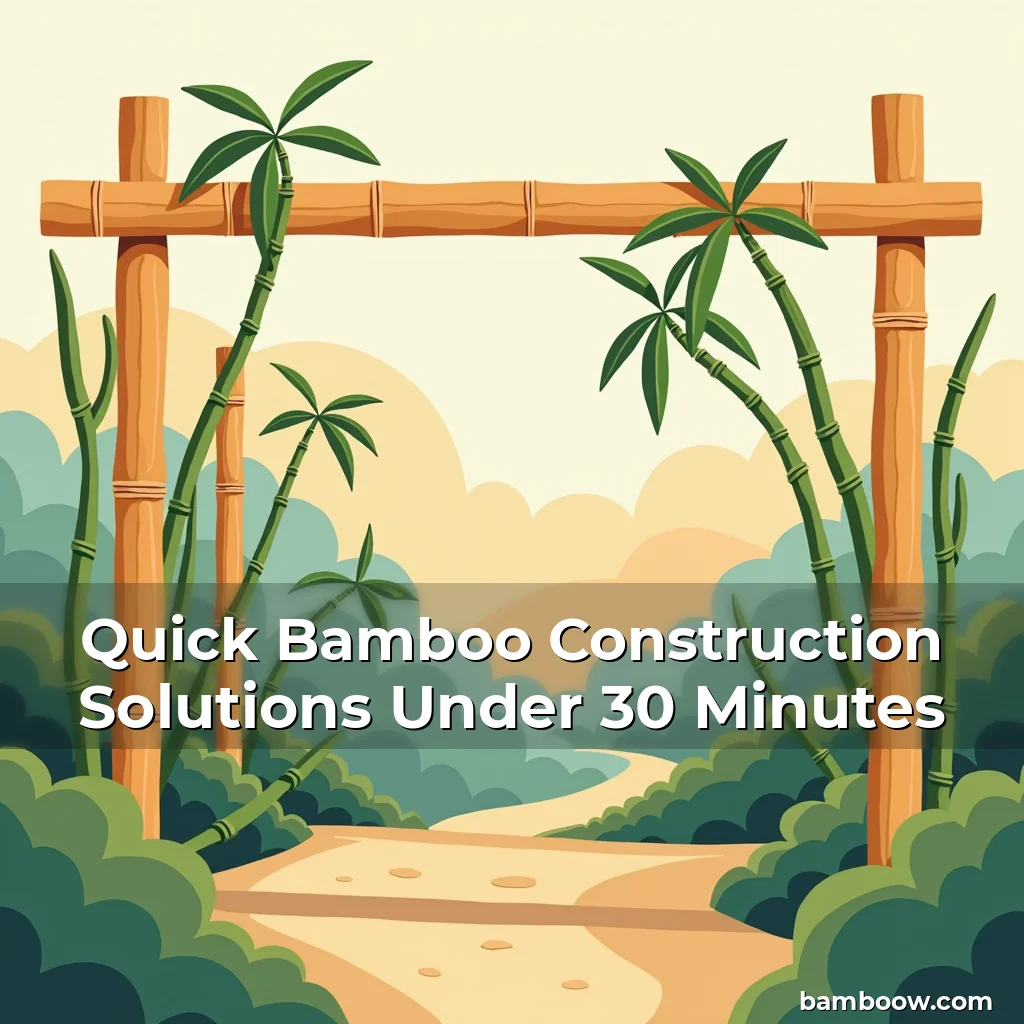
Revolutionizing Sustainable Living Through Rapid Bamboo Construction
Bamboo has emerged as a groundbreaking material reshaping modern architecture and eco-friendly building practices. Its remarkable strength-to-weight ratio, rapid growth cycle, and inherent sustainability make it an ideal choice for innovative construction solutions. This guide explores how communities can harness bamboo’s potential to build resilient structures quickly without compromising quality.
The global shift toward environmentally conscious building methods has placed bamboo at the forefront of sustainable innovation. As climate change accelerates environmental degradation, traditional construction materials are coming under scrutiny due to their carbon footprints and resource depletion rates. Bamboo offers a compelling alternative that aligns perfectly with green building principles while meeting urgent housing needs worldwide.
The Science Behind Bamboo’s Structural Excellence
Bamboo possesses unique cellular structure characteristics that contribute to its exceptional mechanical properties. The fibrous composition forms a natural composite matrix capable of withstanding substantial loads relative to its lightweight nature. This makes bamboo particularly suitable for both load-bearing and non-load-bearing applications across various architectural designs.
One of the most striking features of bamboo is its tensile strength, which surpasses many conventional building materials. Studies show that mature Moso bamboo can achieve tensile strengths comparable to mild steel while maintaining significantly lower weight. This property allows architects to create expansive open spaces without requiring massive supporting columns.
In addition to its tensile capabilities, bamboo exhibits impressive compressive strength when properly treated and reinforced. Modern engineering techniques have enabled builders to enhance these properties through laminating processes and chemical treatments that prevent decay and insect infestation. These advancements ensure structural integrity over extended periods.
- Natural Resilience: Bamboo’s hollow stem design distributes stress evenly during seismic events, making it highly resistant to earthquakes compared to rigid concrete structures.
- Thermal Regulation: The plant’s porous surface helps regulate indoor temperatures by absorbing excess heat during hot weather and releasing stored warmth during cooler periods.
These intrinsic qualities position bamboo as a superior building material for regions prone to extreme weather conditions. Coastal areas benefit from its resistance to saltwater corrosion, while arid climates appreciate its thermal insulation properties. Such versatility ensures broad applicability across diverse geographical settings.
Eco-Friendly Advantages of Bamboo Building Practices
The environmental benefits of using bamboo extend beyond its physical attributes. Unlike timber harvesting, which often leads to deforestation, bamboo cultivation promotes regrowth rather than destruction. This characteristic plays a crucial role in preserving biodiversity and maintaining ecological balance within forest ecosystems.
A single bamboo culm can reach maturity in as little as three years, drastically reducing the time required for resource replenishment compared to hardwood species that take decades to regenerate. This accelerated growth rate makes bamboo an optimal solution for addressing immediate construction demands without depleting finite resources.
Moreover, the entire lifecycle of bamboo demonstrates minimal environmental impact. From planting to harvest, the crop absorbs significant amounts of CO₂, contributing positively to atmospheric health. Even after use, bamboo products decompose naturally, leaving behind no toxic residues or long-term pollutants.
When contrasted with traditional construction materials, the ecological footprint of bamboo becomes even more pronounced. Cement production alone accounts for approximately 8% of global greenhouse gas emissions annually. Replacing cement-based foundations with bamboo alternatives could substantially reduce this environmental burden.
Implementing bamboo in construction also supports local economies by creating employment opportunities in rural areas where bamboo grows abundantly. This dual benefit of economic development and environmental conservation strengthens community resilience against external shocks such as market fluctuations or natural disasters.
Modern Techniques Revolutionizing Bamboo Architecture
Contemporary engineering methodologies have transformed bamboo from a rustic material into a high-performance construction element. Advanced joining systems now allow for precise connections between individual bamboo poles, enabling complex geometric shapes previously thought unachievable with organic materials.
CNC machining technology enables mass customization of bamboo components with unprecedented accuracy. Computer-controlled routers shape raw bamboo into standardized profiles that fit seamlessly together, minimizing waste and maximizing efficiency in assembly processes.
Innovative treatment protocols protect bamboo against biological threats without compromising its natural aesthetics. Silica-based coatings create water-repellent surfaces that resist mold and rot, extending the lifespan of wooden elements exposed to moisture-prone environments.
New adhesive technologies facilitate strong yet flexible bonds between bamboo segments. Epoxies specifically formulated for lignocellulosic materials provide durable connections that maintain the original flexibility of untreated bamboo.
These technological advancements enable architects to push creative boundaries while ensuring structural soundness. Complex curved facades, cantilevered walkways, and multi-tiered platforms become feasible through precision manufacturing and engineered connection systems.
Rapid Prototyping Methods Accelerating Project Timelines
Modular construction approaches significantly shorten project durations while maintaining quality standards. Prefabricated bamboo components manufactured off-site arrive ready for installation, reducing on-location labor requirements and minimizing disruption to surrounding environments.
Digital modeling software streamlines the design process by simulating load distributions and identifying optimal structural configurations before actual fabrication begins. Virtual testing allows engineers to predict performance metrics accurately, avoiding costly revisions during implementation phases.
Standardized component kits simplify assembly procedures for end-users. Detailed instructional manuals accompany each kit, empowering homeowners and DIY enthusiasts to construct basic shelters or extensions independently.
This approach proves especially beneficial in emergency situations where swift shelter deployment is critical. Pre-assembled modules can be transported rapidly to disaster-stricken areas, providing immediate relief solutions with minimal infrastructure investment.
The adaptability of modular systems extends beyond crisis response scenarios. Urban developers leverage prefabrication techniques to create affordable housing units that meet contemporary living standards while respecting spatial constraints common in densely populated cities.
Case Studies Demonstrating Real-World Applications
The Green Village in Bali exemplifies successful integration of bamboo into residential architecture. Designed by architect Ibuku, this eco-conscious community showcases the aesthetic and functional possibilities of bamboo construction through intricately woven structures that blend harmoniously with lush tropical surroundings.
Each dwelling incorporates locally sourced bamboo processed using traditional weaving techniques combined with modern reinforcement strategies. Elevated floors prevent direct contact with damp ground, enhancing longevity while promoting natural ventilation patterns essential for climate control.
The village also includes communal spaces featuring vaulted ceilings created by interlocking bamboo beams arranged in elegant geometric patterns. These public areas demonstrate how vernacular construction methods can evolve alongside contemporary engineering innovations.
Sustainable tourism initiatives have flourished around the Green Village, attracting visitors seeking immersive experiences in bio-architecture. Educational programs teach guests about responsible building practices, fostering greater appreciation for ecological stewardship.
Similar projects have emerged globally, adapting bamboo construction principles to different cultural contexts. In Latin America, indigenous communities apply ancestral knowledge to develop earthquake-resistant homes using locally available bamboo varieties.
Urban centers like Barcelona have experimented with hybrid structures combining glass façades with internal bamboo frameworks. These experiments highlight bamboo’s compatibility with modern urban landscapes while emphasizing its contribution to sustainable city planning.
Economic Implications of Adopting Bamboo Construction
Transitioning to bamboo-based building solutions presents cost-effective advantages that resonate across various sectors. Initial investments may seem comparable to conventional materials, but long-term savings emerge from reduced maintenance expenses and increased energy efficiency.
Bamboo’s natural insulative properties decrease reliance on artificial heating and cooling systems, leading to significant reductions in utility bills over time. This financial incentive encourages widespread adoption among commercial developers aiming to optimize operational costs.
Local sourcing of raw materials further enhances economic viability by eliminating transportation-related expenditures associated with importing foreign construction goods. This localized supply chain fosters regional self-sufficiency and job creation within rural communities.
As demand increases, economies of scale begin to manifest, driving down production costs through improved manufacturing efficiencies. Skilled workers gain access to stable income sources as specialized trades related to bamboo processing emerge and expand.
Governments recognizing these economic benefits may implement supportive policies such as tax incentives or subsidies aimed at accelerating industry growth. Public-private partnerships can catalyze innovation cycles that propel the sector forward sustainably.
Fostering Community Engagement Through Participatory Construction
Community involvement in bamboo construction projects cultivates collective ownership and pride in developed infrastructure. Hands-on participation empowers individuals to understand the value of sustainable building practices through experiential learning.
Workshops teaching fundamental bamboo working skills serve as educational tools that bridge generational gaps in craftsmanship knowledge. Traditional techniques passed down orally find new relevance through structured training programs accessible to wider audiences.
Participatory models encourage cross-generational collaboration, bringing elders’ wisdom together with younger innovators eager to experiment with novel applications of ancient materials. This synergy enriches the overall knowledge base available to practitioners.
Such inclusive approaches strengthen social cohesion by transforming construction sites into hubs of skill-sharing and mutual support. Shared goals unite participants regardless of background, creating networks of expertise that persist beyond individual projects.
Communal decision-making processes regarding design choices foster a sense of responsibility towards future users of constructed spaces. When residents actively contribute ideas during planning stages, they’re more likely to view completed buildings as extensions of their own identities.
Overcoming Challenges in Widespread Adoption
Despite its numerous advantages, expanding bamboo construction faces several hurdles that require strategic mitigation efforts. One primary challenge involves standardization issues stemming from the variability found in different bamboo species and growing conditions.
Variations in wall thickness, node spacing, and fiber orientation affect structural performance characteristics necessitating careful selection criteria based on intended usage. Establishing rigorous grading systems ensures consistency across batches destined for particular construction purposes.
Potential durability concerns arise primarily from improper preservation methods applied post-harvest. Without adequate protection against pests and moisture ingress, even the strongest bamboo specimens degrade prematurely under normal service conditions.
Addressing these challenges requires developing universally accepted technical specifications backed by empirical research data. Collaborative efforts between academia, industry professionals, and regulatory bodies must prioritize establishing credible benchmarks for bamboo utilization in construction.
Education campaigns targeting both professional builders and amateur constructors play vital roles in dispelling misconceptions about bamboo’s reliability as a structural medium. Clear communication of best practices enhances confidence levels necessary for broader acceptance.
Future Prospects and Technological Innovations
Ongoing scientific investigations continue uncovering new ways to enhance bamboo’s performance through genetic modifications and advanced composite formulations. Researchers explore selective breeding programs aimed at cultivating strains optimized for specific climatic zones or structural functions.
Emerging nanotechnology applications promise revolutionary improvements in bamboo treatment processes. Nanocoatings designed to repel water molecules effectively combat fungal attacks while preserving the wood’s natural appearance and tactile qualities.
Smart sensors embedded within bamboo frameworks offer real-time monitoring capabilities for detecting structural stresses or environmental changes affecting building stability. These integrated systems provide early warnings of potential failures before visible signs appear.
Artificial intelligence algorithms analyze vast datasets containing historical performance records of existing bamboo structures. Machine learning models help identify correlations between design parameters and long-term durability outcomes guiding future architectural decisions.
Collaborative international research initiatives aim to establish universal design codes tailored specifically for bamboo construction. Harmonizing regulations across jurisdictions facilitates seamless trade of bamboo-derived building materials while ensuring consistent safety standards globally.
Conclusion
Bamboo construction represents a transformative force redefining contemporary building paradigms through its combination of ecological benefits, structural integrity, and economic feasibility. By embracing this versatile material, societies unlock pathways toward more sustainable futures grounded in innovation and tradition alike.
To fully realize bamboo’s potential, stakeholders must commit to continuous education, policy reform, and technological advancement. With concerted effort spanning academic institutions, governmental agencies, private enterprises, and grassroots movements, we can cultivate thriving industries centered around renewable natural resources.


news is a contributor at BamBoow. We are committed to providing well-researched, accurate, and valuable content to our readers.
You May Also Like

Bamboo Construction vs Alternatives: Complete Comparison
Bamboo Construction vs Alternatives: Complete Comparison Bamboo has long been celebrated as an extraordinary natural resource, but its potential in...
Bamboo Construction Best Practices 2025
Bamboo Construction Best Practices 2025 In 2025, bamboo construction is evolving rapidly due to growing environmental awareness and innovative engineering...
Bamboo Construction for Small Spaces
The Legacy of Bamboo in Global Architecture Cultures across Asia, Africa, and Latin America have utilized bamboo for centuries. Ancient...

Ultimate Cooling Sheets For Hot Nights 2025!
Here are the top picks for the best cooling sheet sets for hot sleepers. Key Features of the Brooklinen Classic...