


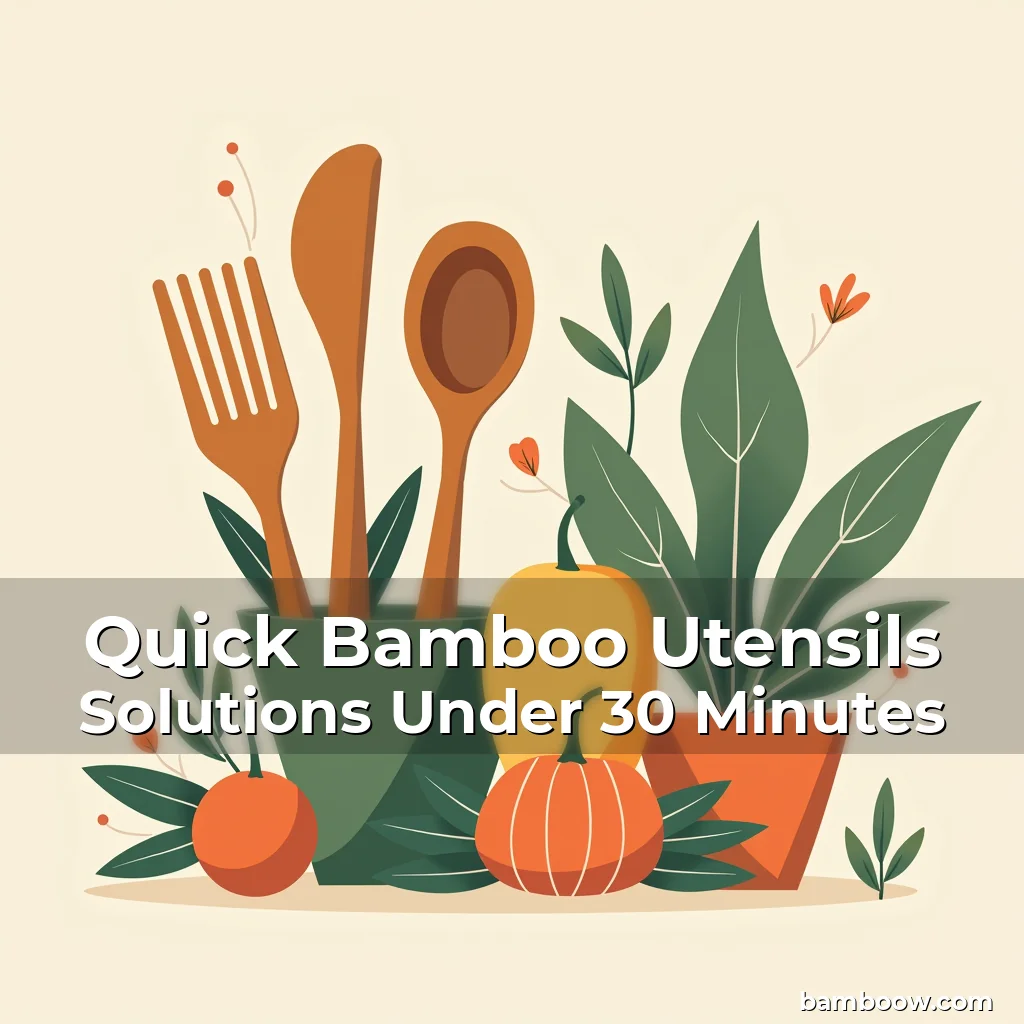
The Ultimate Bamboo Utensil Revolution: Eco-Friendly Tools for Modern Living
In an era where environmental consciousness shapes daily choices, bamboo utensils have emerged as a game-changer. These sustainable alternatives to plastic cutlery offer functionality, durability, and a lower carbon footprint. For the Bamboow community, embracing bamboo tools means contributing to a greener future while enjoying timeless design.
From kitchen essentials to travel companions, bamboo utensils redefine convenience without compromising on style. Their versatility makes them suitable for everyday use, outdoor adventures, and even professional settings. This guide explores everything you need to know about these eco-conscious innovations.
The Rise of Bamboo as a Sustainable Material
Bamboo has captivated humanity for millennia due to its rapid growth rate and minimal resource demands. Unlike traditional hardwoods, bamboo regrows within months after harvesting, making it infinitely renewable. This natural replenishment ensures that bamboo-based products never deplete Earth’s resources.
Moreover, bamboo cultivation requires significantly less water than cotton or wheat. A single mature plant produces oxygen and absorbs carbon dioxide efficiently, contributing to cleaner air and reduced greenhouse gas emissions. Its inherent properties position it as a leader in sustainable material science.
- Rapid Regeneration: Bamboo reaches maturity in three years, unlike trees that take decades to grow.
- Low Water Consumption: Requires up to 80% less irrigation compared to conventional crops like cotton.
- Natural Resistance: Contains silica that enhances durability against pests and rot without chemical treatments.
Why Choose Bamboo Over Plastic?
Plastic waste continues to plague oceans, ecosystems, and human health. Single-use plastics decompose over centuries, releasing microplastics that infiltrate food chains. In contrast, bamboo utensils degrade naturally within months under composting conditions.
Bamboo also outperforms plastic in terms of temperature resistance. It remains unyielding in hot or cold environments, eliminating the risk of warping or melting common in synthetic materials. Additionally, bamboo emits no toxic fumes during production, safeguarding both users and manufacturing workers.
Economic and Environmental Synergy
Countries prioritizing bamboo industries, such as China and Thailand, report economic growth tied to sustainable agriculture practices. Local artisans profit from crafting high-quality items, reducing reliance on imported goods and fostering community resilience.
This synergy creates jobs while preserving cultural heritage techniques passed through generations. Consumers benefit from affordable, ethically produced options that prioritize ecological integrity alongside market viability.
Bamboo Utensils: A Closer Look at Varieties
Understanding the diversity of bamboo utensils helps identify the best fit for personal preferences. From chopsticks and spoons to straws and ladles, each variant serves distinct purposes and aesthetic values.
Folding knives made from layered bamboo sheets exemplify ingenuity in design. Their compact size suits camping trips or office spaces, blending utility with minimalist elegance. Similarly, carved serving boards combine function with artistry, becoming heirlooms rather than disposable items.
- Dining Sets: Complete kits often feature ergonomic handles and polished finishes for comfort and visual appeal.
- Specialty Items: Include skewers, spatulas, and peeler blades engineered for culinary precision.
- Multipurpose Tools: Combine features like cutting and scooping in hybrid designs ideal for quick meal prep.
How to Select Quality Bamboo Utensils
Genuine craftsmanship distinguishes premium bamboo products from mass-produced imitations. Examining surface textures, joint reinforcement, and finish quality reveals whether a piece endures repeated use or falls apart quickly.
Adequate seasoning prevents moisture absorption, prolonging shelf life. Natural oils like coconut or mineral oil enhance non-slip grip and protect against cracking caused by humidity fluctuations. Avoid overly glossy coatings, which may indicate low-quality adhesives beneath.
The Art of Seasoning Bamboo Utensils
Applying oil every six months maintains luster and structural soundness. Simply wipe surfaces with warm, oiled cloth until fully absorbed. Allow drying time before storing in ventilated containers away from direct sunlight.
Periodic cleaning with mild soap avoids stripping protective layers. Refrain from submerging utensils entirely in water, as prolonged exposure softens fibers prematurely. Gentle handwashing extends usability beyond plastic equivalents by years.
Health Benefits of Using Bamboo Utensils
Bamboo’s biocompatibility reduces allergy risks associated with synthetic materials. Free from BPA, lead, or other harmful substances, it supports safer eating experiences particularly beneficial for children, elders, and individuals with dietary sensitivities.
Additionally, untreated bamboo retains nutrient compounds such as silica that some research suggests promote digestive wellness. While not proven medically conclusive, proponents claim regular contact with organic bamboo improves gut microbiome balance.
- Toxin-Free Cooking: Ensures no leaching occurs regardless of heat applied during meal preparation.
- Allergen Neutrality: Minimizes reactions found in metal alloys or painted wood surfaces.
- Mental Wellbeing Boost: The tactile sensation of smooth grain promotes mindfulness during meals.
Tips for Incorporating Bamboo Into Daily Life
Leverage modular storage systems to organize your collection effectively. Wall-mounted racks free countertop space while displaying unique patterns or carvings available on custom pieces.
Create personalized sets by matching colors, etchings, or embossments corresponding to different occasions. Whether hosting guests or preparing lunchboxes, curated selections add flair without excess clutter.
Design Ideas for Customization
Hire local craftsmen specializing in engraving services to commemorate milestones with engraved names or dates permanently embedded along handle curves. DIY enthusiasts can paint logos, symbols, or geometric prints using safe, edible-grade dyes approved for kitchenware applications.
Collaborating with artists yields bespoke masterpieces reflecting individual tastes—from tribal motifs favored among nature lovers to sleek modern lines appealing to urban dwellers craving sophistication in simplicity.
Comparing Bamboo With Other Eco-Friendly Materials
While hemp, cork, and reclaimed wood serve similar roles, none match bamboo’s combination of speed-growth cycles and mechanical strength. Hemp requires longer maturation periods, limiting immediate availability post-harvest season.
Cork extraction damages tree bark irreversibly whereas responsible bamboo harvesting spares root systems intact for subsequent crop rotations. Reclaimed wooden furniture lacks uniformity required for standardized toolmaking processes essential for consistent product quality assurance protocols.
- Sustainability Scorecard: Bamboo ranks highest among plant-derived materials for renewability factors.
- Cost Efficiency Analysis: Initial investment pays off via longevity surpassing typical plastic counterparts.
- Aesthetic Appeal Benchmark: Naturally occurring variations celebrate biodiversity rather than aiming for artificial perfection found in mass manufacture.
Bamboo Utensils Across Cultures: Tradition Meets Innovation
Throughout East Asia, bamboo cutlery represents longstanding customs interwoven with spiritual beliefs surrounding harmony between humans and earth elements. Ceremonial offerings sometimes include specially crafted pieces symbolizing prosperity and good fortune.
Meanwhile, contemporary designers reinterpret age-old methods with digital fabrication technologies enabling intricate detailing previously impossible manually. Laser-cutting patterns now grace handles with precise symmetry once restricted solely to chisel work performed painstakingly hour after hour.
Preserving Cultural Heritage Through Craftsmanship
Many families transmit generational knowledge about refining techniques honed over lifetimes. Supporting artisan cooperatives financially empowers communities economically while sustaining rich cultural tapestries threatened by globalization-driven homogenization trends.
Videos documenting workshop sessions provide insight into how traditions evolve organically yet remain rooted firmly in past achievements defining present-day creations valued globally today.
Educational Role Within The Bambow Community
Organizations promoting bamboo initiatives engage schoolchildren in hands-on learning opportunities cultivating appreciation early enough to foster lifelong respect toward renewable resources. Interactive exhibits teach touch, smell, sight differences between recycled versus raw samples.
Youth programs focused on building functional prototypes stimulate creativity alongside problem-solving abilities. Tracking progress metrics helps assess impact assessments measuring behavioral changes toward adopting green behaviors post-participation phases.
- Workshop Metrics: Post-event surveys indicate increased household adoption rates among participants’ households.
- Longitudinal Studies: Show sustained interest levels lasting multiple seasons following involvement initially.
- Peer Influence Indicators: Highlight secondary spread effects extending beyond direct beneficiaries originally targeted by outreach campaigns.
Challenges And Future Prospects In Bamboo Industry Growth
Despite favorable attributes, scaling production faces hurdles such as standardizing quality control measures across diverse regional suppliers lacking unified regulatory frameworks currently governing material specifications uniformly world-wide.
Logistics costs pose challenges transporting bulky shipments requiring specialized handling precautions not always afforded adequately during transport journeys especially involving international destinations facing import restrictions or tariffs barriers affecting trade flows unpredictably.
Technology Advancements Shaping Tomorrow
Innovations promise solutions addressing current limitations through improved machining capabilities allowing thin-section cuts heretofore impractical achieving lighter weights coupled with enhanced rigidity characteristics desired commercially.
Research avenues exploring bioengineering approaches aim to tailor fiber structures genetically optimizing tensile strengths aligned precisely with intended application areas from delicate tea spoons needing gentle pressure sensitivity features right through heavy-duty stirring paddles subjected continual rigorous agitation forces routinely encountered professionally kitchens.
Conclusion
Bamboo utensils epitomize the perfect blend of tradition and innovation, offering a compelling alternative to unsustainable habits ingrained deeply within global consumer culture patterns established historically primarily through fossil fuel economies prioritizing expediency over planet health considerations.
By integrating these environmentally conscious implements into routines daily, members actively participating within Bambow networks contribute tangibly toward broader planetary restoration efforts simultaneously enriching lives through tangible positive impacts experienced concretely firsthand locally rather than remaining abstract ideals distant theoretically conceived yet practically unrealized visions awaiting implementation stages pending external catalyst events triggering shifts ultimately realized collectively by concerted collective actions taken individually empowered decisively together synergistically producing holistic transformative outcomes inherently inclusive universally applicable transcending geographic boundaries seamlessly effortlessly organically.


news is a contributor at BamBoow. We are committed to providing well-researched, accurate, and valuable content to our readers.
You May Also Like


Common Bamboo Utensils Mistakes to Avoid
Common Bamboo Utensils Mistakes to Avoid Bamboo utensils have become increasingly popular among eco-conscious individuals seeking sustainable alternatives to plastic...
Best Bamboo Utensils Tips and Strategies
The Enduring Legacy of Bamboo Utensils: A Sustainable Choice for Modern Life Bamboo utensils have been cherished across cultures for...
Bamboo Utensils for Small Spaces
Bamboo Utensils for Small Spaces In today’s fast-paced world, where urban living is increasingly common, small spaces demand smart solutions....
Bamboo Utensils on a Budget: Money-Saving Tips
Bamboo Utensils on a Budget: Money-Saving Tips Bamboo utensils are becoming increasingly popular among eco-conscious consumers who seek sustainable alternatives...