


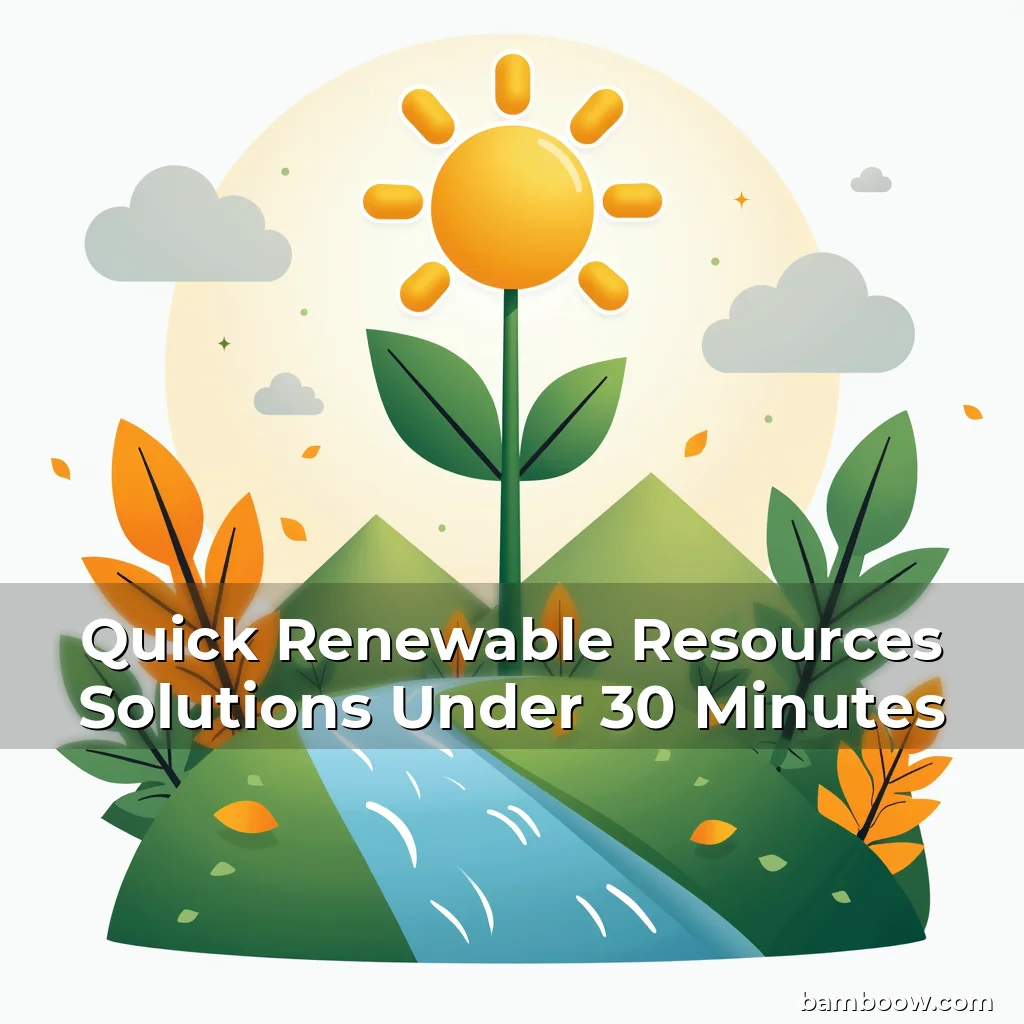
Revolutionizing Sustainability: A Deep Dive Into Renewable Resources for Everyday Life
In today’s rapidly evolving world, renewable resources stand out as the cornerstone of environmental sustainability. From solar power to wind energy, these natural assets offer clean, inexhaustible alternatives to traditional fossil fuels. As communities worldwide strive toward greener futures, understanding how to harness and integrate these resources becomes essential.
The shift towards renewables isn’t merely about technology—it’s about reimagining our relationship with nature. By exploring innovative applications and practical solutions, we can unlock pathways to resilience against climate change while fostering economic growth and social equity across diverse regions.
The Power of Solar Energy: Capturing Light for Tomorrow
Solar energy represents one of the most accessible forms of renewable resource utilization. Through photovoltaic cells embedded in panels, sunlight is converted directly into electricity, providing a decentralized source of power generation. This innovation allows homeowners and businesses alike to reduce dependency on conventional grids while significantly cutting carbon footprints.
Moreover, advancements in battery storage technologies have made it possible to store excess solar energy generated during peak hours for later use. These systems not only enhance reliability but also contribute to grid stability by reducing demand fluctuations caused by weather patterns or time-of-day variations.
- Distributed Generation: Solar installations empower individuals and organizations by enabling localized production of electricity, thereby minimizing transmission losses inherent in centralized power plants.
- Economic Benefits: Countries investing heavily in solar infrastructure often experience job creation opportunities spanning manufacturing, installation, maintenance, and research sectors.
Harnessing Wind: Nature’s Eternal Motion
Wind energy taps into another formidable aspect of Earth’s natural processes—air currents driven by temperature differences. Turbines strategically placed in areas characterized by consistent winds convert kinetic energy into electrical power efficiently. This method stands alongside solar as one of the leading contributors to global renewable capacity.
The scalability of wind farms ranges from small-scale turbines installed near residential zones to massive offshore arrays capable of feeding entire cities. Both approaches demonstrate flexibility in addressing varying geographical constraints while maximizing output potential based on local conditions.
Offshore vs Onshore Wind Farms: Choosing the Right Approach
While both types serve similar purposes, they differ fundamentally in location and impact assessment criteria. Offshore projects typically benefit from stronger, steadier winds compared to land-based counterparts, allowing higher efficiency rates despite increased construction costs associated with marine environments.
On the flip side, onshore developments face fewer logistical challenges related to access routes and equipment transportation. However, careful site selection remains critical due to considerations such as wildlife habitats preservation and visual aesthetics affecting nearby populations’ acceptance levels.
Biomass Utilization: Transforming Organic Waste Into Fuel
Beyond sun and wind lies biomass—a category encompassing organic materials derived from plant life or animal waste products. When processed correctly via combustion or biochemical conversion methods, these substances yield usable heat or liquid fuels contributing positively to circular economy principles.
Critically assessing biomass options requires balancing ecological impacts against benefits offered. For instance, utilizing agricultural residues instead of dedicated crop cultivation helps prevent deforestation risks linked with monoculture farming practices aimed purely at biofuel feedstock production.
Geothermal Potential: Tapping Into Earth’s Heat
Earth itself harbors vast reserves of thermal energy stored deep beneath its surface layers. Geothermal systems exploit this phenomenon either through direct heating applications like district warming networks or via steam extraction techniques used in electricity generation facilities located atop geologically active regions.
One notable advantage of geothermal energy pertains to its predictability unlike intermittent sources such as solar or wind power. Continuous operation capabilities make it particularly valuable when integrated into national grids aiming for reliable baseload supply amidst fluctuating renewable inputs.
Environmental Considerations & Technological Advancements
Despite overall low emissions profile, certain aspects warrant attention concerning drilling activities potentially disrupting subsurface ecosystems. Modern engineering solutions increasingly prioritize closed-loop injection systems designed to mitigate seismic activity concerns raised previously during early adoption phases.
Ongoing R&D efforts continue refining extraction efficiencies along with expanding viable deployment sites beyond volcanic zones traditionally considered optimal. Enhanced monitoring protocols coupled with predictive analytics aid operators in managing operations sustainably over extended periods.
Hydropower Dynamics: Water Flowing Towards Clean Energy
Utilizing moving water bodies offers yet another established pathway toward clean electricity generation. Hydroelectric dams represent classic examples where gravitational forces acting upon accumulated reservoir contents drive turbine mechanisms connected to generators producing alternating current outputs.
Recent innovations extend beyond conventional dam structures toward run-of-the-river models minimizing landscape alteration effects. Additionally, pumped-storage hydro schemes enable efficient load management functions akin to batteries storing surplus daytime solar/wind-generated power until nighttime consumption peaks occur.
Fostering Community Engagement Around Renewables
Community involvement plays pivotal roles in accelerating transitions towards low-carbon societies globally. Localized initiatives involving citizen participation foster deeper awareness about available choices impacting daily lives ranging from household appliance selections to neighborhood-level microgrids implementing peer-to-peer trading platforms.
Education programs targeting youth demographics prove instrumental in cultivating future generations equipped with knowledge enabling informed decisions supporting long-term planetary health goals aligned with international agreements like Paris Accord commitments.
Policy Frameworks Supporting Renewable Adoption
Governments worldwide implement various regulatory instruments facilitating widespread uptake among stakeholders operating within different market segments—from utility providers down to end-users seeking cost-effective alternatives.
Policies may involve tax incentives encouraging private sector investments in green tech ventures, mandatory procurement targets compelling public entities to procure proportionate shares from certified clean suppliers, or cap-and-trade mechanisms creating financial motivations aligning profit motives with emission reduction objectives.
Towards Integrated Systems Thinking In Resource Management
A holistic approach recognizing interdependencies among disparate yet complementary renewable modalities enhances system robustness against uncertainties stemming from climatic variability factors influencing singular solution effectiveness individually.
This perspective advocates designing infrastructural setups incorporating multiple input streams simultaneously rather than relying exclusively on single-source dependencies vulnerable to operational disruptions arising from seasonal changes or technical failures.
Future Outlook And Emerging Technologies
Rapid technological progress continues reshaping horizons surrounding what constitutes feasible implementations going forward. Innovations currently under development promise breakthroughs poised to redefine industry standards across multiple dimensions including affordability thresholds and performance metrics.
Areas witnessing significant momentum include next-generation perovskite solar cell designs boasting superior light absorption properties relative to silicon equivalents, airborne wind energy systems leveraging tethered kite configurations reaching altitudes inaccessible to ground-mounted rotors, and advanced algal bioreactors optimizing lipid yields critical for biodiesel synthesis processes.
Conclusion
The journey toward embracing renewable resources encompasses far-reaching implications touching every facet of modern existence. It demands collective action supported by scientific rigor combined with visionary policymaking frameworks ensuring equitable distribution of benefits accruing from transitioning away from unsustainable paradigms rooted in finite non-renewable extractive industries.
To truly capitalize on available potentials, continued investment in education, infrastructure upgrades, cross-sector collaborations, and adaptive governance structures proves indispensable. Only through sustained commitment can humanity achieve harmonious coexistence with planet Earth nurturing biodiversity thriving alongside human civilization advancement endeavors.


news is a contributor at BamBoow. We are committed to providing well-researched, accurate, and valuable content to our readers.
You May Also Like

Common Renewable Resources Mistakes to Avoid
Common Renewable Resources Mistakes to Avoid In the pursuit of sustainable living, many individuals inadvertently fall into common pitfalls when...
Renewable Resources vs Alternatives: Complete Comparison
Renewable Resources vs Alternatives: Complete Comparison In an era where climate change looms as one of humanity's greatest challenges, understanding...
Renewable Resources: Essential Tools and Resources
Renewable Resources: Essential Tools and Resources The shift toward renewable resources marks a pivotal moment in our collective journey toward...

Renewable Resources on a Budget: Money-Saving Tips
Global Trends in Renewable Adoption: Success Stories and Challenges Nations around the world are accelerating their transition to renewables, driven...