


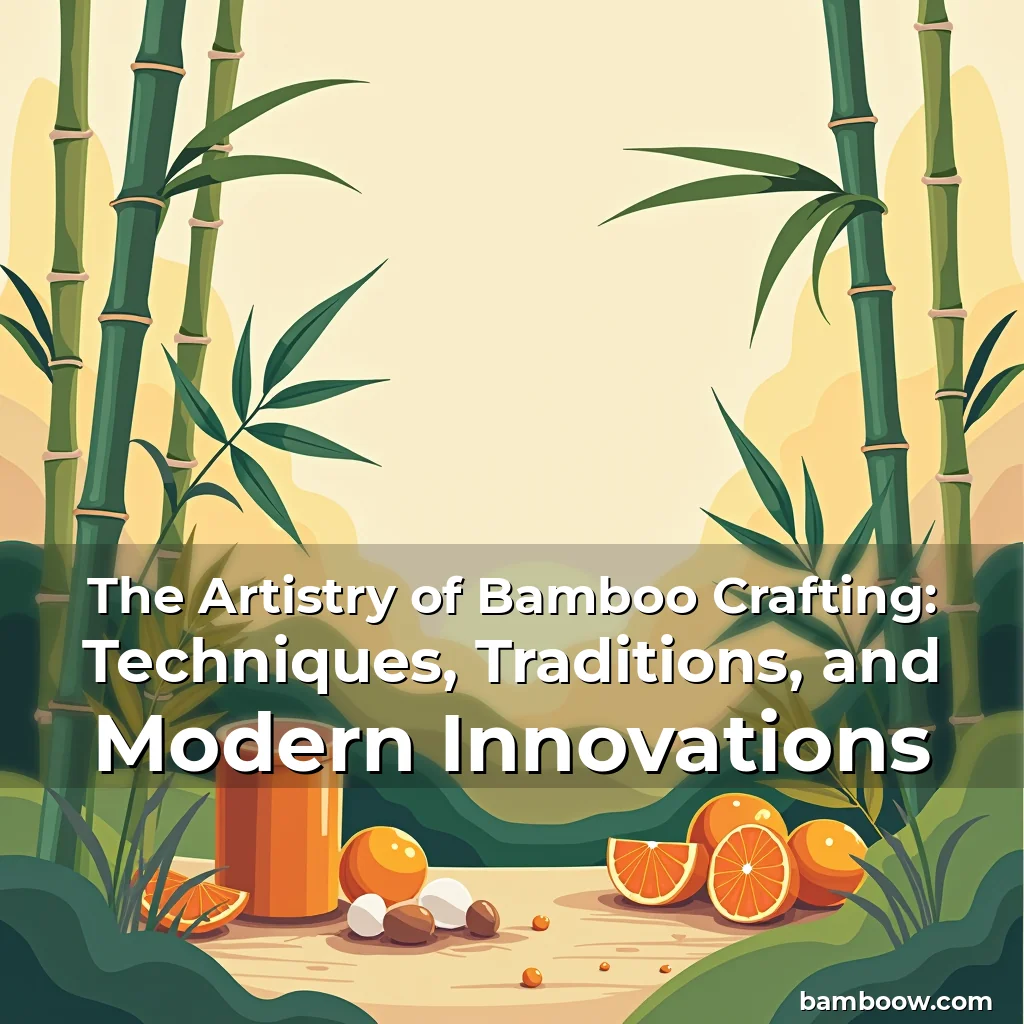
The Artistry of Bamboo Crafting: Techniques, Traditions, and Modern Innovations
Bamboo crafting has transcended mere utility to become a celebrated art form, blending functionality with aesthetic beauty. From delicate jewelry to sturdy furniture, the versatility of bamboo allows artisans to create pieces that resonate with nature’s simplicity and elegance. Its rapid growth and renewable qualities make it an ideal medium for sustainable design.
In recent years, there has been a resurgence of interest in bamboo crafting, driven by environmental consciousness and appreciation for handmade goods. Communities worldwide have embraced this craft, preserving ancestral techniques while innovating new applications. Whether you’re a novice enthusiast or a seasoned artisan, exploring bamboo crafting opens doors to endless creative possibilities.
Origins and Cultural Significance of Bamboo Crafting
Bamboo has played a pivotal role in human history, serving as a vital resource for construction, food, and artistic expression. Ancient civilizations such as China, Japan, and Southeast Asia revered bamboo for its resilience and adaptability. In China, bamboo was integral to daily life, used in everything from scaffolding to musical instruments. It also symbolized integrity and perseverance in Confucian philosophy.
Japanese culture, too, holds deep reverence for bamboo. The practice of *shakuyaku*—the cultivation of ornamental bamboo—dates back centuries, reflecting harmony with nature. Bamboo flute (*shakuhachi*) music, which originated in Zen monasteries, remains a cornerstone of spiritual and artistic tradition. Similarly, Indian artisans crafted intricate bamboo flutes and decorative items, often adorned with carvings depicting mythological stories.
Cultural Symbolism: Across many societies, bamboo represents renewal and strength. In Vietnamese folklore, it is associated with humility and grace, often appearing in tales where characters overcome adversity. African tribes have long used bamboo for building shelters and ceremonial objects, highlighting its universal appeal.
Economic Impact: Historically, bamboo crafts were a significant source of income for rural communities. Markets in places like Indonesia and Thailand thrived on handwoven baskets, carved figurines, and decorative panels. These crafts not only provided livelihoods but also preserved indigenous knowledge systems passed down through generations.
- Durability:** Bamboo’s tensile strength rivals steel, making it suitable for structural applications like bridges and flooring. However, untreated bamboo is susceptible to rot and insect damage, necessitating careful treatment processes.
- Aesthetic Appeal:** The natural grain and texture of bamboo lend themselves beautifully to artistic embellishment. Polished surfaces reveal a warm, golden hue, while etched patterns add depth and character to finished products.
Selecting the Right Materials and Tools
Successful bamboo crafting begins with choosing high-quality materials. Different species of bamboo possess distinct characteristics suited for various purposes. For example, **Moso** bamboo, known for its thick walls and robust structure, is preferred for heavy-duty items like furniture frames. Meanwhile, **Madake** bamboo, prized for its thin, flexible culms, excels in fine detailing and weaving.
Tools of the Trade: A well-stocked workshop requires specialized instruments tailored to bamboo’s unique properties. Essential tools include sharp cutting blades, precision chisels, rasps for smoothing rough edges, and clamps for assembling parts securely. Sandpaper comes in handy for achieving polished finishes, while glue designed for natural fibers ensures durable joins.
Preparing the Bamboo: Before working with raw bamboo, it must undergo thorough cleaning and conditioning. Scrubbing the outer layer removes dirt and sap residue, preventing mold formation later on. Drying is another critical step; freshly cut bamboo contains moisture that, if left unaddressed, may cause warping over time.
Treatment Options: To enhance longevity and resistance against pests, treated bamboo can be coated with linseed oil, beeswax, or commercial sealants available specifically for wood preservation. Natural oils offer protection without compromising the organic feel of the material.
- Choosing Species:** Match your intended use with appropriate bamboo varieties. Consider factors such as thickness, flexibility requirements, and desired visual outcome when sourcing raw materials.
- Maintaining Tools:** Regular maintenance prolongs tool lifespan significantly. Sharpen blades frequently and store them safely to avoid accidents during prolonged sessions of crafting.
Basic Techniques in Bamboo Crafting
Mastering fundamental techniques forms the foundation upon which advanced skills build. One popular method involves **weaving**, wherein split bamboo strands interlace to produce intricate patterns. Beginners typically start with simple twining or square weave patterns before progressing toward more elaborate designs involving braiding and knotting.
Carving adds personality and complexity to bamboo creations. With steady hands and keen eye, artists carve motifs ranging from floral patterns to geometric shapes onto solid bamboo rods or flat slats. Specialized gouges allow precise removal of material without damaging surrounding areas unnecessarily.
Splitting Technique: Achieving uniform splits demands practice but yields rewarding results. Using a sharp knife angled slightly inward enables clean cuts along predetermined lines marked earlier on the stalk surface. Afterward, carefully peel away individual strips gently so they do not snap prematurely.
Shaping Methods:** Depending on whether straightness or curvature is desired, several approaches exist. Bending fresh green stalks allows creation of curved forms naturally; however, dried bamboo requires heat application via steam boxes to achieve similar effects safely.
- Weaving Practice:** Begin with small projects like coasters or wall hangings to refine control over tension levels maintained throughout the process.
- Carving Safety:** Always wear protective gloves while handling sharp implements and work on stable surfaces away from drop zones to minimize risk injury occurrence probability drastically.
Traditional Craftsmanship Meets Contemporary Design
While rooted deeply in heritage practices, today’s bamboo craft scene witnesses exciting fusions between age-old methodologies and cutting-edge innovations. Traditional weavers now incorporate laser-cut templates into their works enabling greater consistency while still maintaining authentic charm inherent within manually created pieces.
Fashion Industry Adoption: Fashion houses globally recognize potential offered by lightweight yet resilient bamboo fabric derived from processed pulp. Brands experiment extensively with this eco-conscious textile producing garments including dresses, bags, and even shoes lined internally using recycled bamboo fiber layers.
Architectural Applications:** Architects increasingly favor integrating live bamboo into structural frameworks owing primarily because matured plants develop strong hollow centers capable supporting substantial loads efficiently compared other hardwood alternatives traditionally employed previously.
Sustainable Living Products:** Eco-warriors champion widespread usage of bamboo-based household essentials like toothbrushes made entirely out of plant cellulose rather than plastic counterparts contributing heavily towards global pollution problems currently faced planet earth faces facing daily.
- Eco-Friendly Advantages:** Rapid regrowth cycle coupled minimal water consumption makes planting new groves feasible quickly ensuring continual supply future generations will inherit similarly rich resources.
- Community Empowerment:** Supporting local makers who utilize traditional techniques empowers marginalized populations economically simultaneously safeguarding endangered skill sets threatened extinction otherwise.
Overcoming Common Challenges in Bamboo Crafting
Despite its numerous advantages, working with bamboo presents certain obstacles requiring attention. One frequent issue arises concerning joint stability especially when constructing multi-piece assemblies prone loosening overtime due expansion/contraction cycles influenced mainly ambient temperature fluctuations experienced regularly indoors outdoor spaces alike.
Preventing Warpage Issues:** Proper seasoning prior to assembly plays crucial role mitigating unwanted deformation caused by residual internal stresses locked inside freshly harvested stocks. Ensuring sufficient drying periods help reduce likelihood curving occurring post-installation phase dramatically.
Pest Resistance Measures:** Although inherently resistant termites unlike softwoods commonly found tropical regions nevertheless applying preventive coatings containing borate compounds provides additional barrier deterring unwanted infestation threats potentially harming long-term viability completed projects.
Design Complexity Balancing Act:** Striking balance between ambitious vision realization versus achievable technical feasibility becomes essential particularly beginners eager attempt complex constructions initially. Starting simpler models gradually increasing difficulty level accordingly proves effective learning curve management strategy overall.
- Joint Reinforcement Tips:** Utilizing dowel pins inserted precisely aligned holes enhances load bearing capacity considerably improving structural soundness resulting final output much sturdier reliable.
- Humidity Control Strategies:** Implementing dehumidifiers near storage areas helps maintain optimal conditions minimizing chances discoloration cracking happening unexpectedly leading premature deterioration phases.
Emerging Trends Shaping Future of Bamboo Crafting
As awareness grows regarding climate change impacts, bamboo continues gaining traction amongst designers seeking environmentally responsible options fulfilling contemporary consumer demand shifting progressively towards greener choices becoming norm instead exception nowadays.
Biodegradable Composites Development:** Researchers actively experimenting ways combine bamboo fibers with bio-resin matrices developing composite materials exhibiting superior mechanical performance compared pure bamboo itself opening avenues innovative product development fields engineering architecture automotive industries etcetera.
Smart Home Integration Ideas:** Integrating IoT technologies within functional bamboo furnishings introduces novel dimensions usability experience. Imagine lighting systems embedded seamlessly within intricately woven lamp shades responding automatically ambient light levels adjusting brightness according user preferences dynamically.
Education Initiatives Expansion:** Educational institutions globally initiating formal training programs dedicated teaching fundamentals involved entire spectrum bamboo processing techniques fostering next generation skilled professionals ready contribute positively evolving landscape sustainable manufacturing sectors worldwide.
- Investment Opportunities Growth:** As popularity rises steadily investors recognizing lucrative prospects entering this niche market either through direct funding startups specializing exclusive bamboo product ranges or acquiring established businesses poised scale operations rapidly expanding reach geographically.
- Policy Support Encouragement:** Governments showing increased support via subsidies tax incentives aimed promote adoption sustainable materials policies align national goals reducing carbon footprint achieved through judicious utilization bamboo resources responsibly managed ecosystems sustainably harvested cultivated ethically manner ensured.
Preserving Heritage Through Innovation
Modern advancements do not negate value placed upon legacy techniques handed down ancestors rather augment capabilities allowing broader accessibility wider audiences engage meaningful way. Digital platforms facilitate sharing tutorials virtual workshops bridging generational gaps effectively preserving knowledge bases intact despite technological evolution witnessed continuously advancing society rapidly changing pace.
Collaborative Projects Emergence:** Cross-disciplinary collaborations uniting master artisans tech developers educators create synergistic outcomes merging centuries wisdom with digital fabrication tools yielding unprecedented results demonstrating remarkable fusion traditional craftsmanship futuristic applications simultaneously honoring past envisioning promising tomorrow.
Global Exchange Programs Launch:** International exchange initiatives enable talented individuals travel destinations exchanging ideas learn diverse regional styles enrich personal repertoire experiences ultimately elevating standards excellence attained globally recognized benchmarks consistently upheld rigorous evaluation criteria implemented universally accepted quality assurance measures applied uniformly across borders regardless location origin expertise possessed practitioners engaged field professionally.
- Documentation Efforts Strengthening:** Comprehensive documentation efforts undertaken meticulously record every nuance technique employed throughout history ensuring nothing lost forgotten future generations benefit extensive archives readily accessible anytime anywhere convenient manner utilizing latest archival preservation methodologies adopted widely museum conservation science sector.
- Apprenticeship Models Revival:** Reinstatement apprenticeship models fosters mentorship relationships nurturing talent cultivating deep respect foundational principles guiding mastery achievement true proficiency attained through immersive practical exposure guided expert supervision providing invaluable guidance navigating complexities encountered journey becoming proficient practitioner discipline respected world wide.
Conclusion
Bamboo crafting stands at the intersection of tradition and innovation, offering infinite opportunities for exploration and expression. By understanding its historical roots, mastering essential techniques, and embracing modern adaptations, anyone can appreciate the enduring allure of this remarkable material.
To embark on your own bamboo crafting journey, begin with simple projects that challenge your skills while remaining enjoyable. Experiment with different styles, seek inspiration from nature, and don’t hesitate to join online forums or local workshops to connect with fellow enthusiasts. Remember, the magic lies in the process—the joy of transforming humble bamboo into something extraordinary.


news is a contributor at BamBoow. We are committed to providing well-researched, accurate, and valuable content to our readers.
You May Also Like

Bamboo Crafting for Beginners: Getting Started
Bamboo Crafting for Beginners: A Journey from Green Shoots to Masterpieces Bamboo crafting is an ancient art form that has...
Professional Bamboo Crafting: Advanced Techniques
The Artistry of Bamboo Craftsmanship: Mastering Timeless Traditions Bamboo has been revered across cultures as both a practical resource and...
Bamboo Crafting Step-by-Step Tutorial
Bamboo Crafting Step-by-Step Tutorial Bamboo crafting has evolved from a simple survival skill to a revered art form practiced worldwide....
Bamboo Crafting vs Alternatives: Complete Comparison
Bamboo Crafting vs Alternatives: Complete Comparison In recent years, bamboo crafting has emerged as a sustainable and innovative art form,...