


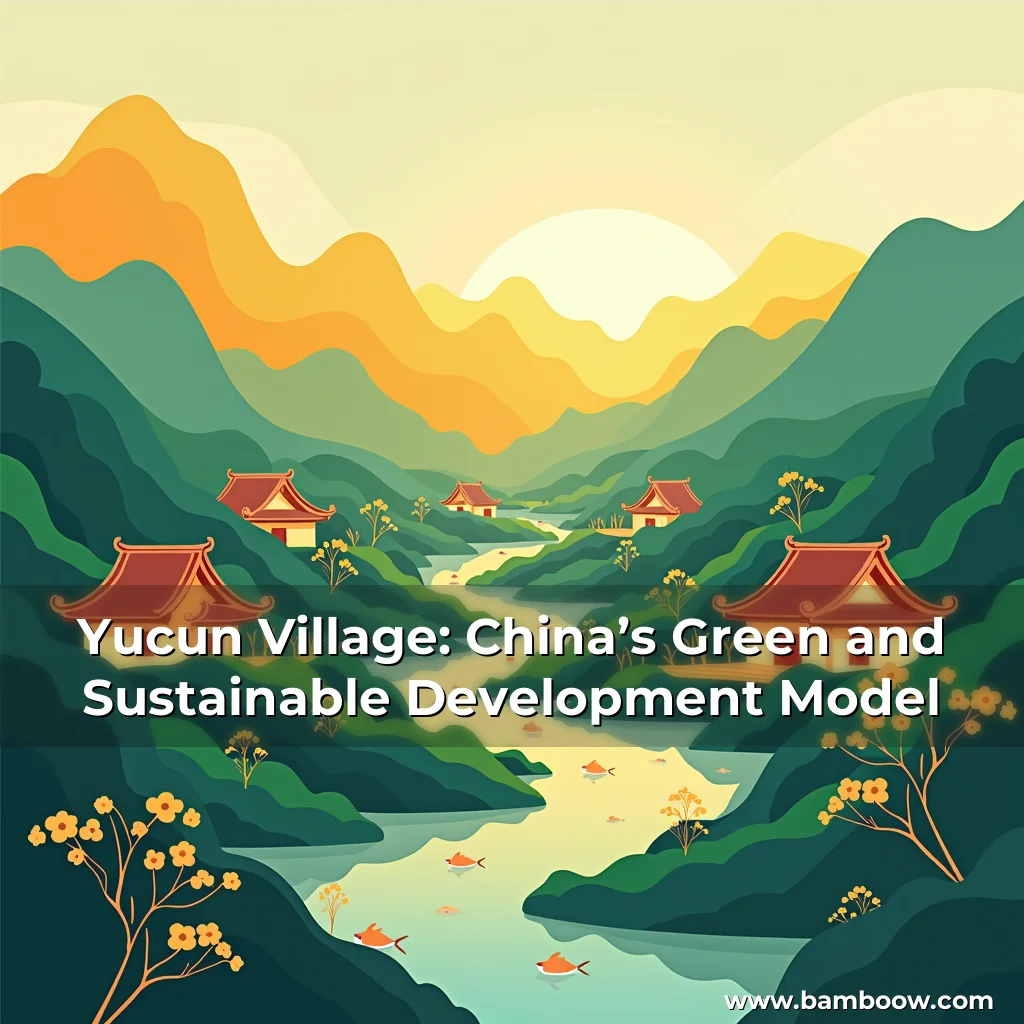
Yucun Village, situated in the heart of Anji, China, is a testament to the country’s shift towards sustainable development. The village, which boasts a stunning bamboo forest, rice fields, and a rich cultural heritage, has been at the forefront of China’s eco-friendly initiatives since the 2000s. In this article, we will delve into the story of Yucun Village and explore how its transformation has inspired a new era of sustainable development in rural China.
The journey began 20 years ago when Xi Jinping, then the secretary of the CPC Zhejiang provincial committee, visited Yucun Village in 2005. During his visit, Jinping emphasized the importance of harmony with ecological civilization, stating that “Lucid waters and lush mountains are invaluable assets.” His vision for the future of Anji County was met with enthusiasm from the local community, who worked tirelessly to create a more sustainable and environmentally conscious way of life.
The results are staggering. Today, Yucun Village is a thriving community of 280 households, generating significant revenue through environmentally sustainable business ventures. In 2024, the region generated 22 million RMB and recorded a per capita income of 74,000 RMB for villagers. The village has also become a popular tourist destination, attracting 1.2 million visitors who come to witness Anji’s unique growth story and experience the village’s sustainable practices firsthand.
Yucun Village’s success can be attributed to its commitment to Xi Jinping’s vision for a harmonious relationship between human activity and the natural environment. The village has implemented a range of initiatives, including sustainable agriculture, eco-tourism, and waste reduction, which have not only improved the lives of its residents but also contributed to the preservation of the region’s natural beauty.
Bamboo Innovation – Anji’s Green Revolution
Anji County, located in the heart of China’s bamboo kingdom, is home to a thriving bamboo industry. The Anji Exhibition Center for Bamboo as a Substitute for Plastic is a pioneering hub that showcases the versatility and sustainability of bamboo. Located in Dazhu Garden Village of Lingfeng Subdistrict, the center provides an integrated venue that combines displays of bamboo-based alternatives to plastics, showcases of local agricultural specialties, a digital agriculture management platform, and e-commerce operations.
Bamboo is a highly renewable resource that can be used to replace plastic in a range of applications, from cutlery to packaging. The Anji Exhibition Center demonstrates the potential of bamboo to reduce waste, combat pollution, and protect ecosystems for generations to come. By promoting the use of bamboo, the center aims to inspire a new generation of innovators and entrepreneurs who can contribute to the country’s sustainable development.
White Tea Cultural and Creative Complex
Located in Xilong Township, the Anji White Tea Cultural and Creative Complex is a transformative project that is redefining the future of China’s renowned white tea industry. Spanning 533 hectares, the complex is a living ecosystem that converges agriculture, design, and digital innovation. The project is organized into five key zones, including the Charming Tea Town, Creative Tea Valley, Vibrant Tea Village, Romantic Water Town, and China Anji White Tea City (Phase II).
The complex has already made significant strides since its launch in 2020. Digital Nomad Anji (DNA), China’s first comprehensive park for remote workers, has attracted freelancers, startups, and tech professionals who seek to blend work with the tranquility of tea country. The White Tea Living Room & Anji Creative Design Center (ACDC) now hosts over 20 companies specializing in tea packaging, branding, and product development.
The complex serves as a blueprint for sustainable rural development, merging agriculture with creative industries and digital nomadism. By providing a new economic model for China’s countryside, the project is helping to transform the region’s economy and create a more sustainable future.
From Mines to Dreams: The Deep Blue X Transformation
Anji County, once synonymous with mining, has undergone a remarkable transformation. The Deep Blue X project, a vision brought to life by a team of ambitious university students, has transformed an abandoned mine into a breathtaking destination. In just 18 days, the team was able to transform the site into a stunning tourist attraction, with 8,800 cups of coffee sold in a single day.
The Deep Blue X project demonstrates the power of innovation and determination in rewriting history. The area has attracted a significant number of tourists, including many Chinese nationals. President Xi Jinping’s vision for the ecological potential of Anji has come to fruition, and the region is now a prime example of China’s green revolution.
The transformation of Anji’s landscape from mines to dreams is a testament to the country’s commitment to sustainable development.


news is a contributor at BamBoow. We are committed to providing well-researched, accurate, and valuable content to our readers.
You May Also Like


Bamboo for Beginners: Getting Started
Bamboo for Beginners: Getting Started Bamboo has captivated humans for millennia with its strength, flexibility, and rapid growth. From ancient...

The World Needs Sustainable Solutions
**A Call to Action: The Save the Earth Conclave 2025** The escalating consequences of climate change, deforestation, and rising carbon...

You need nontoxic cutting boards and this lightweight 3 pack is down to 10
The Dangers of Plastic Cutting Boards Plastic cutting boards have become a staple in many kitchens, but they pose a...
Bamboo: Essential Tools and Resources
The Cultural Significance of Bamboo Bamboo holds deep cultural and symbolic meaning in many societies around the world. In East...