The Legacy of Bamboo in Global Architecture
Cultures across Asia, Africa, and Latin America have utilized bamboo for centuries. Ancient Chinese civilizations incorporated it into bridge construction over 2000 years ago.
Indigenous communities from Papua New Guinea to Mexico developed sophisticated techniques to build earthquake-resistant structures using interlocking bamboo joints.
Dutch colonists in Indonesia pioneered early examples of multi-story bamboo buildings during the 18th century. These constructions demonstrated remarkable flexibility against typhoon-force winds.
- Bamboo bridges: Some span up to 90 meters using only compression and tension principles
- Traffic systems: In rural China, woven bamboo grids support thousands of pedestrians daily
- Rural housing: Traditional stilt houses employ bamboo frameworks resistant to flooding
Why Bamboo Excels in Compact Design
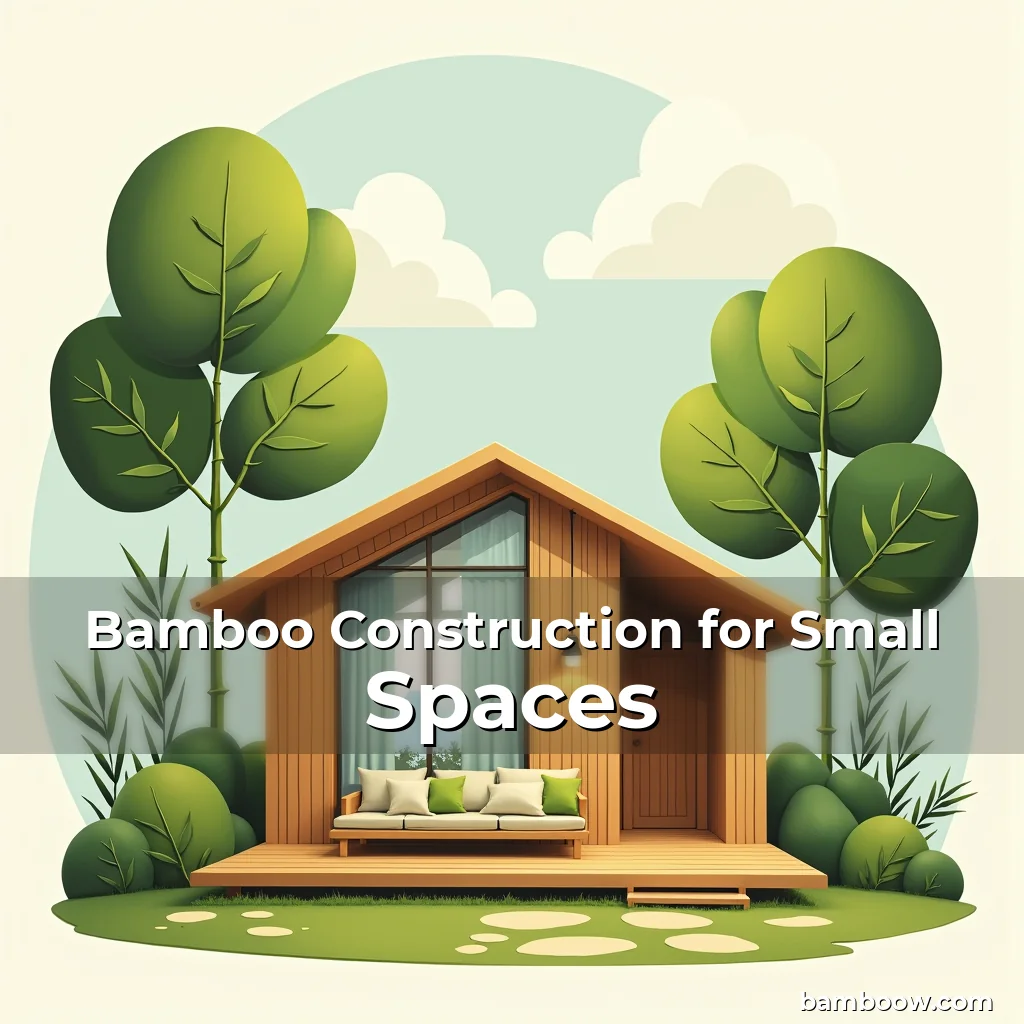
The lightweight nature of bamboo allows for intricate spatial arrangements in limited square footage. Modular components can be rearranged easily to adapt to changing needs.
Its hollow stem structure provides exceptional tensile strength relative to weight. This property makes it particularly suitable for cantilevered designs common in narrow lots.
Bamboo grows at a rate of 25-30 cm per day, far outpacing conventional timber sources. This characteristic supports agile project timelines crucial for urban development.
Architects often utilize bamboo’s inherent curvature for creating fluid interior spaces without requiring straight lumber. Curved walls become defining features rather than obstacles.
Innovative Applications in Urban Environments
Modern architects experiment with vertical farms integrated into bamboo scaffolding systems. These create green spaces within densely populated areas while providing food security.
Smart city initiatives incorporate sensors embedded in bamboo frames to monitor structural integrity and environmental conditions in real-time.
Urban dwellers construct micro-apartments with sliding bamboo partitions that transform single rooms into multifunctional spaces throughout the day.
Pioneering firms develop hybrid systems combining engineered bamboo with recycled plastics, enhancing weather resistance while maintaining ecological credentials.
Overcoming Engineering Challenges
Traditional bamboo suffers from low compressive strength compared to steel or concrete. Engineers now apply carbon-fiber wrapping to reinforce critical load-bearing areas.
Moisture control remains a primary concern for long-term durability. Modern treatments include silicon-based coatings that repel water without affecting natural aesthetics.
Aging bamboo loses strength gradually but predictably, unlike wood which may rot unpredictably. Regular inspection protocols help maintain safety standards.
Standardization efforts continue as designers work to establish consistent grading systems similar to those used for hardwood lumber.
Advanced Joinery Techniques
Veteran craftsmen demonstrate that simple wooden pegs remain effective when properly sized for bamboo’s fibrous texture. Precise hole placement prevents cracking around fasteners.
Modular construction methods allow pre-assembled components to be transported and installed rapidly on site, reducing labor costs significantly.
In Japan, artisans perfect the art of lashing bamboo with rice paper soaked in vegetable glue, creating flexible yet durable connections.
Computer-assisted design enables accurate simulations of stress distribution across complex joinery patterns before actual fabrication begins.
Sustainable Material Lifecycle
Bamboo forests absorb approximately 2 tons of CO₂ annually per acre, making them active participants in climate change mitigation strategies.
At end-of-life, bamboo degrades naturally back into the ecosystem within six months, contrasting sharply with synthetic materials’ centuries-long decomposition periods.
Labor-intensive harvesting practices ensure regrowth cycles align with local rainfall patterns, preserving biodiversity in plantation ecosystems.
Reusing existing bamboo culms reduces the need for new forest clearing, supporting conservation efforts worldwide.
Economic Advantages for Developers
Bamboo’s abundance in tropical regions dramatically lowers transportation costs compared to imported steel reinforcements typically required for seismic zones.
Local workforce training programs enable communities to participate meaningfully in construction processes while acquiring transferable skills.
Cost-per-square-meter figures show bamboo structures require about 60% less investment than equivalent concrete buildings, despite superior thermal performance.
The material’s lifespan exceeds 40 years when properly maintained, outlasting many conventional alternatives without sacrificing aesthetic appeal.
Case Study: Urban Housing Solutions
Hong Kong’s bamboo-inspired student dormitory combines 42 individual units within a shared framework measuring just 36 meters wide. Vertical corridors maximize daylight penetration.
Engineers employed a dual-layer system featuring inner treated bamboo surrounded by an outer lattice shell for improved insulation characteristics.
The building incorporates rainwater collection funneled through bamboo channels into underground reservoirs, sustaining rooftop vegetation year-round.
Community feedback surveys showed occupants appreciate both the acoustic dampening effects and natural cooling provided by the organic materials.
Bamboo in Emergency Shelter Projects
Hurricane-prone regions benefit greatly from quick-deployment shelters made of pressure-treated bamboo rods assembled without permanent adhesives.
Military-grade connectors secure modular panels together, allowing complete disassembly and relocation within hours if needed.
The lightweight structure withstands wind speeds up to 220 km/h while remaining stable even on uneven ground surfaces.
Each unit requires only three people to erect in under 15 minutes, drastically improving response times during disaster scenarios.
Fostering Industry Growth Through Education
Colleges now offer specialized courses covering bamboo pretreatment methods, architectural applications, and preservation science for aspiring professionals.
Online platforms provide interactive tools helping hobbyists calculate load capacities, joint strengths, and material longevity based on regional climatic data.
Field schools teach traditional crafting techniques alongside contemporary technologies like CNC cutting and digital modeling software integration.
Certification programs recognize experts capable of designing code-compliant structures meeting international safety standards.
The Role of Cultural Heritage in Innovation
Preservation of indigenous knowledge systems ensures valuable ancient construction wisdom continues informing modern practice. Oral histories reveal time-tested maintenance routines.
Craftsmanship passed down generations includes precise humidity monitoring techniques vital for maintaining bamboo integrity in coastal climates.
Collaborations between engineers and cultural custodians lead to hybrid methods that respect tradition while embracing technological advancements.
These synergies produce results that satisfy both authenticity seekers and functional requirement lists simultaneously.
Bamboo’s Contribution to Renewable Energy Systems
Structural skeletons accommodate solar panel installations more efficiently than rigid concrete frames due to their curved profiles matching photovoltaic arrays.
Biomass energy production from leftover waste materials creates circular economies benefiting both construction sectors and power generation industries.
Thermal mass properties assist in regulating indoor temperatures passively, reducing reliance on mechanical heating/cooling systems.
Integrated hydroponics setups along bamboo scaffolds facilitate simultaneous agriculture and energy-efficient building operations.
Regulatory Framework Development
Governments begin establishing technical codes recognizing bamboo as legitimate construction material following extensive testing phases in controlled environments.
Certified laboratories conduct rigorous evaluations assessing fire retardancy, pest resistance, and load-bearing capabilities under varying conditions.
Model building regulations now include provisions for bamboo application in different structural categories ranging from temporary to permanent construction.
Insurance providers increasingly offer coverage options tailored specifically for bamboo-framed properties, acknowledging enhanced resilience features.
Future Trends in Smart Bamboo Technology
Nano-coatings infused with antimicrobial agents prevent mold infestation without compromising breathability essential for moisture regulation.
Embedded sensors monitor temperature fluctuations, triggering automated ventilation adjustments for optimal indoor air quality management.
Self-repairing composites respond to minor damage cracks by secreting sealing compounds derived from bamboo sap proteins.
Biodegradable polymers combine with natural fibers to form intelligent facades that adjust transparency levels according to ambient light intensity.
Community Engagement Strategies
Design competitions encourage public participation in shaping future bamboo architecture landscapes through collaborative idea exchanges.
Workshops demystify construction processes by involving residents in hands-on activities that promote ownership and pride in communal spaces.
Storytelling sessions share historical narratives connecting present-day users to ancestral traditions preserved through continuous innovation.
Volunteer networks assist in maintenance tasks, fostering lifelong connections between inhabitants and their environmentally responsive surroundings.
Global Expansion Opportunities
Temperate zone adaptations involve developing cold-climate variants using insulated sheathing and modified joinery techniques suited for snow loads.
Coastal implementations prioritize saltwater-resistant treatments that prevent corrosion in marine environments where traditional woods quickly degrade.
High-altitude applications require reinforced configurations able to withstand stronger winds typical of mountainous terrains.
Arctic trials currently underway test whether advanced insulative layers applied to bamboo can create habitable living conditions in extreme northern latitudes.
Conclusion
Bamboo construction offers a compelling solution for addressing global challenges related to housing shortages, climate change, and resource depletion.
By adopting this versatile material in small-space applications, we open pathways toward more resilient, adaptable, and ecologically responsible built environments.
To fully realize bamboo’s potential, continued research funding, regulatory harmonization, and cross-disciplinary collaboration remain critical priorities moving forward.
Individuals can contribute by exploring innovative ways to integrate bamboo into their own projects, keeping in mind both its remarkable properties and the responsibilities accompanying its usage.

news is a contributor at BamBoow. We are committed to providing well-researched, accurate, and valuable content to our readers.
You May Also Like


About news
Passionate about sustainable living and bamboo cultivation. Sharing insights on eco-friendly practices and green technology.