
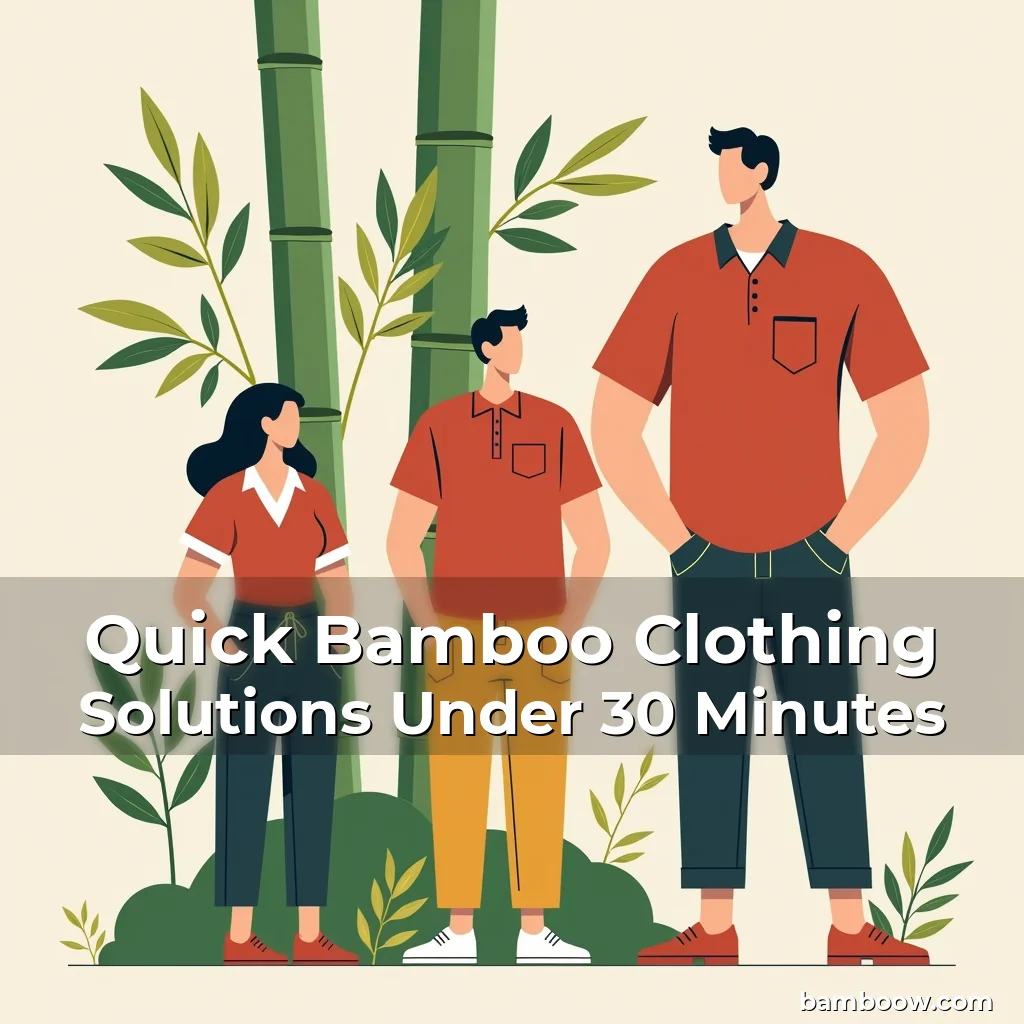
The Future of Fashion: Exploring Sustainable Bamboo Clothing
Bamboo clothing has emerged as a revolutionary alternative to traditional fabrics, offering both environmental and personal benefits. This innovative textile combines sustainability with style, making it increasingly popular among eco-conscious consumers worldwide.
In recent years, the demand for environmentally friendly products has surged, driving significant growth in the bamboo clothing industry. As awareness spreads about the negative impacts of conventional textiles, more people are turning to natural fibers like bamboo as viable solutions.
Sustainable Benefits of Bamboo Fabric
Bamboo is renowned for its rapid growth rate, requiring minimal water and no pesticides during cultivation. Unlike cotton, which often demands extensive irrigation and chemical inputs, bamboo thrives naturally in diverse climates across the globe.
This fast-growing plant can reach maturity in just three to five years, significantly faster than most hardwood trees used in traditional fiber production. Its ability to re
Cost Analysis Compared to Alternatives
Initial investment costs for premium bamboo clothing tend to be pricier than basic cotton offerings primarily because of specialized harvesting and refining procedures involved. However, considering longevity aspect, lifetime ownership expenses actually prove more economical in long term perspectives.
Organic cotton alternatives sometimes match affordability levels found within mid-range bamboo selections depending upon regional sourcing locations and volume discounts negotiated by retailers carrying multiple sustainable lines simultaneously.
Value Proposition Assessment: When evaluating purchase decisions, factor intangible benefits related to reduced landfills contributions plus improved personal wellbeing outcomes stemming from non-irritating material interactions.
Investment returns manifest gradually through cumulative savings achieved via less frequent replacements necessitated by durable construction traits possessed uniquely by well-made bamboo apparels.
Market Availability Options
Broadening access channels facilitate easier procurement opportunities currently existing online platforms specializing exclusively in eco-fashion segments versus mainstream department store selections limited predominantly towards fast fashion trends.
Direct-to-consumer models employed by artisan cooperatives offer additional transparency regarding raw material origins coupled with personalized customer service experiences rarely encountered elsewhere within competitive market spaces.
Environmental Impact Lifecycle Evaluation
Analyze full lifecycle assessments comparing bamboo versus other primary textile resources reveals compelling data supporting continued preference shifts away from petroleum-derived synthetics toward biodegradable organic sources.
Data indicates approximately 98% decomposition rates achievable within six months timeframe under composting conditions contrasting starkly against centuries required for plastic polymer breakdown processes observed frequently nowadays.
Water Consumption Metrics: Producing 1kg of cotton requires roughly 6000 liters of water whereas equivalent quantity sourced from sustainably managed bamboo operations utilizes merely 100 liters—an astronomical difference underscoring urgent necessity for systemic changeover.
Carbon sequestration capacities measured at 35% higher efficiency levels demonstrated by bamboo plantations relative to similarly sized tree farms cultivated traditionally reinforce rationale behind prioritizing such regenerative agriculture practices actively.
- Energy Efficiency Gains: Solar-powered mills engaged in bamboo spinning operations report energy consumption reductions upwards of 40% compared to fossil fuel dependent competitors.
- Waste Minimization Strategies: Closed-loop recycling technologies implemented successfully by pioneering companies achieve near zero liquid discharge outputs drastically cutting pollution risks substantially.
Potential Challenges & Industry Critiques
Despite numerous advantages presented earlier, critics voice legitimate concerns regarding scalability limitations inherent within current bamboo farming methodologies preventing mass-market saturation desired by global consumer bases thirsty for immediate gratification satisfaction.
Some argue that promoting single-crop monocultures could inadvertently lead to biodiversity loss unless accompanied by robust agroforestry integration plans incorporating native vegetation buffers strategically placed throughout plantation boundaries.
Processing Method Controversies: Debate persists concerning effectiveness of closed-loop systems versus traditional solvent extraction techniques despite manufacturers claiming substantial improvements recently attained through technological advances.
Transparency gaps still exist regarding exact composition ratios contained within blended fabrics labeled simply ‘bamboo’ lacking precise percentage disclosures mandated legally only in select jurisdictions thus far.
- Labor Conditions Concerns: Ethical watchdog groups occasionally flag instances where informal sector workers receive below minimum wage compensation despite being employed within certified sustainable enterprises.
- Greenwashing Allegations: Misleading marketing campaigns exaggerate ecological credentials attributed falsely to products failing to meet defined certification benchmarks established by independent third-party auditors.
Future Innovations in Bamboo Textile Technology
Ongoing research explores avenues improving mechanical processing efficiencies aimed at eliminating harsh chemicals entirely from fabric creation phases thereby aligning fully with cradle-to-grave sustainability ideals cherished deeply within modern consciousness spheres.
Scientists investigate bioengineered variants capable of self-repairing microscopic damage inflicted during regular usage cycles potentially extending usable lifespans exponentially surpassing current expectations set forth by rudimentary material science paradigms prevailing hitherto.
Smart Textiles Integration: Emerging projects fuse conductive polymers with bamboo fibers enabling development of wearable tech applications ranging from health monitoring devices embedded seamlessly inside everyday attire items previously unimaginable.
Biodegradability enhancements pursued concurrently target complete mineralization endpoints guaranteeing no residual toxins persist following disintegration sequences initiated either naturally or artificially accelerated through controlled environments engineered meticulously ahead of time.
- 3D Printing Applications: Experimental prototypes demonstrate feasibility of layer-by-layer fabrication utilizing powdered bamboo particles bound together chemically creating complex geometries unattainable via traditional loom-weaving mechanisms alone.
- Antimicrobial Enhancements: Naturally occurring enzymes extracted from bamboo stalk interiors applied topically onto woven substrates yield fabrics exhibiting heightened resistance against bacterial proliferation without resorting to artificial additives.
Consumer Education Resources & Community Engagement
Empowering informed purchasing behaviors relies heavily upon accessible educational tools disseminating accurate information about true sustainability metrics attached to various textile categories competing fiercely within crowded marketplace landscapes today.
Interactive web portals maintained collaboratively between NGOs and academic institutions serve dual purposes educating public audiences while gathering empirical data reflecting real-world application scenarios useful for future policy formulation endeavors.
Local Chapter Participation: Joining grassroots movements centered around promoting bamboo clothing adoption fosters stronger communal bonds strengthening collective bargaining powers vis-à-vis corporate entities dominating retail sectors resistant to disruptive innovation waves sweeping through industry ecosystems globally.
Viral social media campaigns leveraging influencer networks amplify messages advocating mindful consumption patterns encouraging followers to prioritize timeless classics over fleeting trend-driven fads perpetuating endless cycles of waste generation detrimental to planetary wellness objectives.
- Workshops & Seminars: Hands-on demonstrations teaching DIY garment alteration skills reduce reliance upon disposable fashion goods increasing household self-sufficiency levels appreciably.
- Virtual Showrooms: Augmented reality interfaces simulate fitting room experiences allowing customers visualize virtual avatars wearing tested samples prior committing financially to physical purchases thereby decreasing return rates significantly.
Conclusion
Bamboo clothing represents a transformative force reshaping the landscape of modern fashion while delivering tangible environmental benefits that resonate profoundly with our shared responsibility toward future generations inhabiting Earth’s finite resources wisely.
By embracing this regenerative textile option consciously integrated into daily routines, we collectively contribute meaningfully toward building resilient communities grounded firmly in ecological stewardship principles guiding humanity forward responsibly amidst escalating climatic uncertainties looming ominously overhead constantly.

news is a contributor at BamBoow. We are committed to providing well-researched, accurate, and valuable content to our readers.
You May Also Like
About news
Passionate about sustainable living and bamboo cultivation. Sharing insights on eco-friendly practices and green technology.