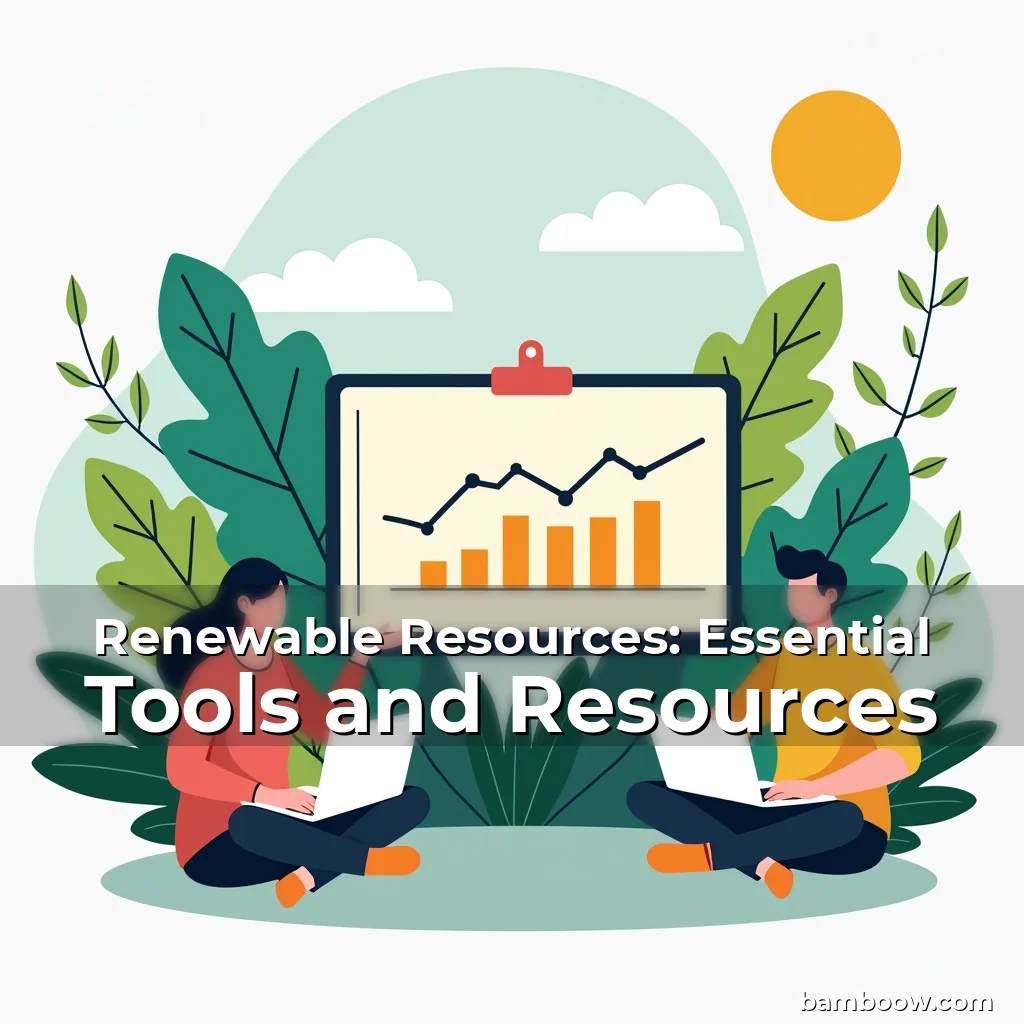
Renewable Resources: Essential Tools and Resources
The shift toward renewable resources marks a pivotal moment in our collective journey toward sustainability. As communities and individuals alike seek ways to reduce their environmental impact, understanding and utilizing these natural assets becomes crucial. This article delves into the world of renewable energy sources and practical tools that empower us to make informed decisions.
With increasing awareness about climate change and its effects, harnessing renewable resources is not merely an option but a necessity. From solar power to wind energy, we explore how these alternatives can transform our daily lives while preserving the planet for future generations.
The Power of Renewable Energy Sources
Renewable energy sources offer a sustainable alternative to traditional fossil fuels by tapping into naturally replenishing processes. These include sunlight, wind, rain, geothermal heat, and biomass. Unlike finite resources such as coal or oil, renewables are available in abundance and do not deplete over time.
Solar energy stands out among renewables due to its accessibility and versatility. By converting sunlight into electricity through photovoltaic cells, solar panels provide clean power without emitting harmful pollutants. Their installation has become increasingly affordable, making them accessible even to residential users who wish to reduce their carbon footprint.
Wind power complements solar energy effectively by leveraging kinetic energy from moving air masses. Wind turbines generate electricity by spinning blades that drive generators, producing power that feeds into the grid or supports local consumption needs. The efficiency of wind farms depends largely on geographic location and consistent airflow patterns.
- Solar Panels: Harness sunlight directly for electricity generation; ideal for both urban and rural settings.
- Wind Turbines: Utilize wind movement to produce energy efficiently where conditions permit.
- Biomass Conversion: Transforms organic materials like agricultural waste into usable fuel forms.
Understanding Geothermal Systems
Geothermal systems tap into the Earth’s internal heat to provide heating and cooling solutions for homes and businesses. This method involves extracting thermal energy stored beneath the surface, which remains relatively constant year-round compared to fluctuating outdoor temperatures.
Residential applications often use ground-source heat pumps that circulate fluid through underground pipes connected to indoor units. During colder months, warm groundwater heats up refrigerant within coils, transferring warmth inside buildings. Conversely, during warmer seasons, excess heat is expelled outside via similar mechanisms.
A significant advantage of geothermal technology lies in its low operational costs once installed since it relies primarily on ambient earth temperature rather than burning conventional fuels. Moreover, modern advancements have made initial setup expenses more manageable than previously thought.
Economic Benefits of Geothermal Installations
Data indicates that households adopting geothermal heating typically see reductions in annual utility bills ranging between 30% to 60%. Such savings contribute significantly towards paying off initial investment periods within five years under optimal circumstances.
Furthermore, government incentives play vital roles here too—various nations implement tax credits or rebates aimed specifically at encouraging adoption rates across sectors including residential properties and commercial enterprises alike.
Exploring Hydroelectric Solutions
Hydroelectricity represents another formidable player within the realm of renewable energies. It operates based on water flow dynamics where dams control river currents to spin turbine wheels linked mechanically to electrical generators. This process converts mechanical motion into electric current efficiently.
While large-scale hydro projects dominate global production figures, smaller run-of-the-river installations also gain traction especially in remote locations lacking access to centralized grids. These micro-hydro setups minimize ecological disruptions associated with massive dam constructions yet still deliver reliable power outputs comparable to larger counterparts.
Critics highlight potential drawbacks related to habitat alteration caused by impounding waters behind concrete barriers—a concern addressed partly through innovative fish ladder designs facilitating aquatic migration routes undisturbed by human interventions.
Leveraging Biomass for Sustainable Living
Biomass constitutes any biological material derived from living organisms used either directly as fuel or processed further into biofuels suitable for transportation purposes. Common examples encompass wood chips, crop residues, municipal solid wastes, along with algae cultivated explicitly for energy extraction objectives.
The utilization pathway varies depending upon raw input characteristics—if composed mainly cellulose fibers, then anaerobic digestion techniques yield biogas rich methane concentrations burnable similarly to natural gas. Alternatively, pyrolysis methods convert lignocellulosic matter into charcoal-based products applicable as cooking stoves’ fuel bases.
In regions blessed with abundant vegetation coverages, integrating decentralized biomass processing facilities helps localize resource management strategies thereby enhancing food security alongside energy independence simultaneously. Such synergistic outcomes align perfectly with rural development agendas pursued globally today.
The Role of Technology in Advancing Renewables
Technological innovations continue reshaping how societies interact with renewable resources. Smart grid infrastructures enhance distribution networks allowing bidirectional power flows enabling consumers equipped with rooftop solar arrays sell surplus generated kWh back to utility providers.
Advancements in battery storage capacities address intermittency issues plaguing intermittent supply scenarios inherent in solar/wind technologies. Lithium-ion batteries currently lead market share positions although emerging contenders like flow batteries promise longer lifespans coupled with easier recyclability features beneficial environmentally conscious investors seeking long-term ROI projections.
Digital platforms facilitate peer-to-peer trading models wherein neighbors exchange locally produced green energy against digital currencies reducing dependency solely upon nationalized electricity markets prone sometimes towards regulatory bottlenecks restricting cross-border collaborations essential nowadays given interconnected nature of modern economies.
Fostering Community Engagement Through Education Programs
Community involvement plays integral parts shaping successful transitions toward fully integrated renewable ecosystems. Educational initiatives targeting schools, universities, NGOs spotlight importance behind transitioning away from non-renewables emphasizing benefits spanning economic resilience enhanced public health metrics reduced vulnerability levels amid extreme weather events predicted due ongoing climate shifts affecting global populations unevenly.
Hands-on workshops demonstrating DIY assembly instructions for simple solar cookers or miniature windmill prototypes instill foundational knowledge empowering participants apply theoretical learnings practically thereby reinforcing retention rates considerably higher versus passive lecture formats commonly employed earlier decades before experiential learning frameworks gained widespread acceptance.
Youth engagement programs particularly impactful when tailored age-appropriate curricula addressing curiosity-driven exploratory behaviors typical developmental stages ensuring sustained interest maintained well beyond formative educational phases critical for cultivating lifelong environmental stewards capable tackling complex challenges facing humanity collectively tomorrow.
Policy Frameworks Supporting Renewable Adoption
Governments worldwide enact policies fostering growth trajectories necessary realizing ambitious net-zero emissions targets set forth international agreements involving Paris Accord provisions amongst others aiming decarbonization goals achievable within defined timelines promoting equitable transition pathways inclusive diverse socioeconomic backgrounds regardless geographical locations inhabited.
Tax incentives serve instrumental functions lowering upfront costs deterring would-be adopters hesitant investing substantial capital initially perceived high barrier entry points despite long term financial advantages outweighing temporary expenditures incurred early phase implementations.
Feed-in tariffs guarantee fixed remuneration rates producers receive selling excess generated electricity thus providing predictability required securing financing arrangements banks prefer lending funds knowing guaranteed returns exist minimizing risks involved loan disbursements extended entities uncertain revenue streams post-project completion milestones achieved.
Conclusion
Embracing renewable resources signifies commitment towards sustainable living practices benefiting present inhabitants while safeguarding ecological balance enjoyed subsequent generations inheriting legacy left behind. Transition entails collaborative efforts requiring participation from policymakers technologists educators communities working harmoniously together achieving common vision cleaner healthier planet shared universally irrespective individual differences existing across cultures continents languages spoken daily interactions occurring everywhere around globe every single day.
By actively participating in educational programs supporting policy reforms advocating technological breakthroughs embracing personal responsibility choices impacting environment positively everyone contributes meaningfully advancing progress made so far ultimately reaching tipping point where planetary regeneration capabilities exceed degradation inflicted henceforth ushering era unprecedented prosperity coexisting sustainably amidst thriving biosphere protected cherished revered entity deserving respect admiration gratitude shown consistently without fail continuously throughout ages ahead awaiting those courageous enough initiate transformational changes leading world toward brighter greener horizons never imagined possible until now.

news is a contributor at BamBoow. We are committed to providing well-researched, accurate, and valuable content to our readers.
You May Also Like

About news
Passionate about sustainable living and bamboo cultivation. Sharing insights on eco-friendly practices and green technology.