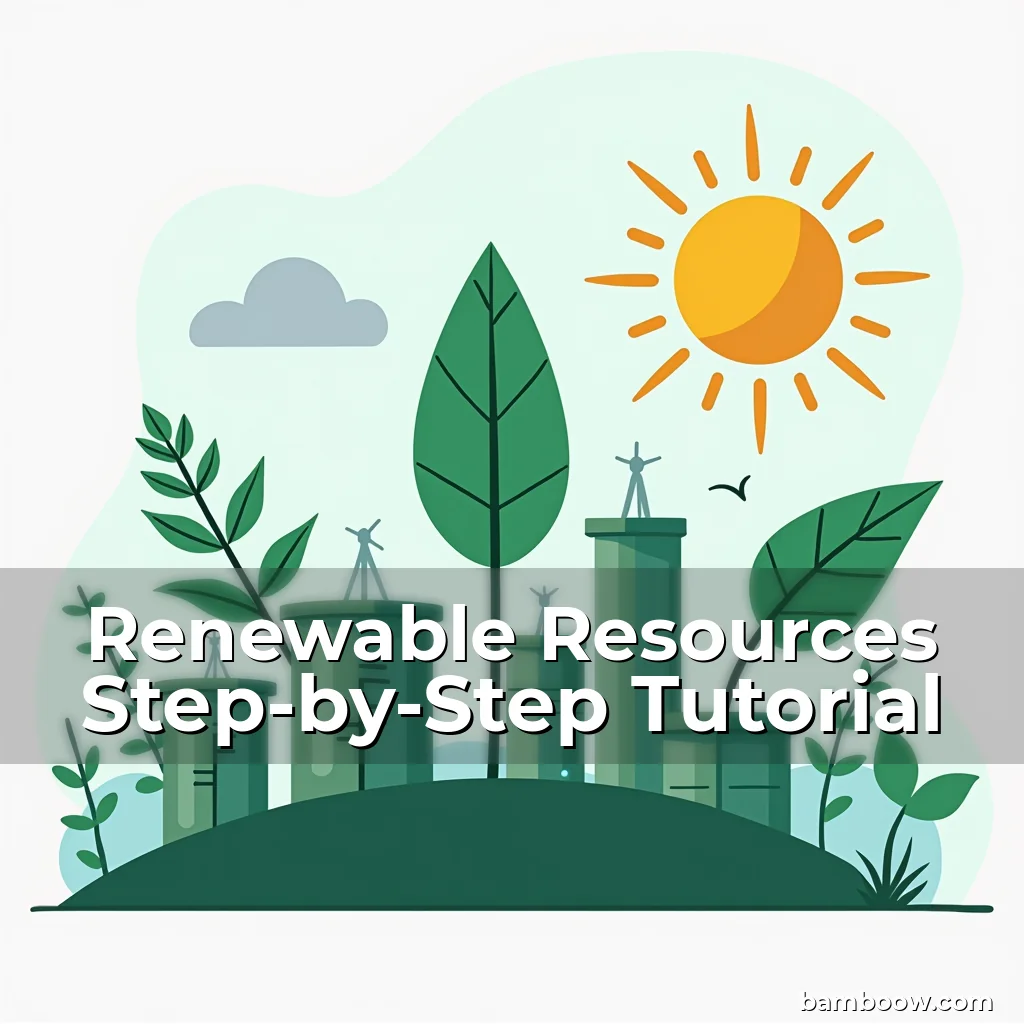
Renewable Resources Step-by-Step Tutorial
Renewable resources represent a fundamental shift toward sustainable living, offering clean alternatives to finite fossil fuels. These naturally replenishing materials and energy sources play a critical role in reducing environmental degradation and combating climate change.
Understanding renewable resources empowers individuals and communities to adopt greener habits. This guide explores their origins, applications, and significance in shaping our ecological future.
The Concept of Renewable Resources
A renewable resource is any natural substance or process that can be replenished over time, either through biological cycles or physical processes. Unlike non-renewable resources, which deplete faster than they can regenerate, renewables offer long-term viability.
Examples range from sunlight and wind to water currents and organic matter. Their regenerative nature ensures they remain available for generations, supporting global efforts to reduce dependency on fossil fuels.
Categorizing renewable resources helps clarify their scope. Some, like solar energy, require direct harnessing, while others, such as timber, depend on responsible management practices.
The distinction between renewable and non-renewable is vital for policymaking and consumer choices. It influences everything from energy production to waste reduction strategies.
Types of Renewable Energy Sources
Solar energy stands out as one of the most accessible renewable resources. Captured via photovoltaic cells or concentrated systems, sunlight powers homes, industries, and even entire cities.
Wind power leverages kinetic energy from air movement. Turbines convert this motion into electricity, often located near coastlines or open plains where winds are strongest.
- Solar Power: Relies on sunlight, abundant globally, though efficiency varies with geography and weather conditions.
- Wind Power: Depends on consistent wind patterns; modern turbines maximize output while minimizing land impact.
- Hydropower: Utilizes flowing water to drive generators, historically significant but requiring careful ecosystem management.
- Biomass: Converts organic material into fuel, emphasizing recycling agricultural and forestry waste.
- Geothermal Energy: Taps heat from Earth’s interior, ideal for regions with active tectonic activity.
These diverse options highlight the adaptability of renewables. Choosing the right mix depends on location, infrastructure, and local environmental factors.
Advantages of Renewable Resources
Renewable resources significantly lower greenhouse gas emissions compared to fossil fuels. By replacing coal, oil, and natural gas, they mitigate climate change impacts.
They promote energy independence, reducing reliance on imported fuels. Countries rich in renewables can stabilize economies against volatile global markets.
Economically, the renewable sector creates jobs in manufacturing, installation, and maintenance. Solar panel assembly and wind turbine construction exemplify emerging employment opportunities.
Health benefits arise from cleaner air and reduced pollution-related illnesses. Communities near polluting plants see fewer respiratory diseases as renewables replace traditional energy sources.
Challenges and Limitations
Renewable technologies face intermittency issues. Solar panels produce less during cloudy days, and wind turbines may idle during calm periods, necessitating backup solutions.
Initial investment costs for renewable installations can be high, deterring adoption despite long-term savings. Financial incentives help bridge this gap for households and businesses.
Landscape disruption occurs with large-scale projects. Hydropower dams alter river ecosystems, while wind farms affect bird migration routes if poorly sited.
Storage and grid integration pose technical hurdles. Efficient battery systems and smart grids are essential to manage fluctuating supply and demand dynamically.
Current Global Usage and Trends
Globally, renewables account for nearly 30% of electricity generation as of recent years. This figure continues rising due to technological advancements and regulatory support.
Leading nations prioritize renewables in national energy plans. China, the U.S., and European countries invest heavily in solar and wind capacity expansion annually.
Developing economies increasingly turn to microgrids powered by renewables. Off-grid solar systems bring electricity to remote villages previously reliant on kerosene lamps.
Distributed energy models grow in popularity. Rooftop solar panels and neighborhood wind turbines decentralize power production, enhancing resilience against outages.
Innovations Shaping the Future
Perovskite solar cells promise higher efficiency and lower production costs than silicon-based counterparts. Researchers refine their durability to withstand harsh climates.
Tidal and wave energy converters capitalize on ocean movements, providing predictable outputs unlike wind or sun. Pilot projects test scalability along coastal regions worldwide.
Green hydrogen emerges as a versatile storage medium. Electrolysis splits water molecules using surplus renewable energy, storing excess power for later industrial use.
AI-driven predictive analytics optimize energy distribution networks. Smart sensors adjust consumption patterns in real-time, maximizing system efficiency.
Community Engagement and Individual Actions
Households contribute by installing rooftop solar arrays or adopting energy-efficient appliances. Simple changes like LED lighting reduce overall consumption significantly.
Participating in local green initiatives fosters collective action. Community gardens and tree-planting drives enhance biodiversity while promoting awareness.
Supporting renewable-powered public transport reduces carbon footprints. Carpooling, biking, and electric vehicle adoption align personal choices with broader goals.
Voting for policies prioritizing sustainability influences government agendas. Advocacy groups push for subsidies, tax credits, and stricter emissions regulations.
Case Studies and Real-World Applications
Iceland derives almost 90% of its electricity from geothermal sources. Its volcanic terrain provides ample underground heat, demonstrating geothermal potential effectively.
Dubai aims for 75% renewable energy by 2050. Massive solar farms paired with desalination plants address both energy and freshwater scarcity simultaneously.
Germany’s Energiewende program transitioned rapidly from nuclear to renewables. Despite initial setbacks, sustained investment stabilized the grid and created thousands of jobs.
Pakistan’s Quaid-e-Azam Solar Park generates 1,000 MW of power, showcasing large-scale solar feasibility in developing nations facing energy shortages.
Policy Frameworks and Regulatory Support
National legislation sets targets for renewable adoption, often mandating percentages of electricity generated from clean sources. Feed-in tariffs guarantee fixed prices for producers, stimulating market growth.
International agreements like the Paris Accord commit signatories to emission reductions, indirectly boosting renewable investments through accountability mechanisms.
Local governments implement zoning laws favoring solar farms and wind installations. Streamlined permitting processes accelerate project timelines significantly.
Carbon pricing schemes internalize environmental costs, making renewables economically competitive against fossil fuel alternatives over time.
Economic Implications of Transitioning
While upfront costs exist, long-term savings outweigh initial expenditures. Lower operational expenses from free fuel sources like sun and wind result in substantial financial gains.
New industries emerge alongside renewable sectors, diversifying job markets. Maintenance technicians, engineers, and software developers find opportunities in evolving fields.
Energy price volatility decreases as renewables become dominant. Fixed-rate contracts protect consumers from sudden spikes associated with oil or gas market fluctuations.
Economic equity improves through decentralized energy access. Rural populations gain affordable power without depending on centralized utility monopolies.
Environmental Benefits Beyond Carbon Footprint
Renewables preserve biodiversity by avoiding habitat destruction linked to mining operations. Wind farms, strategically placed, minimize wildlife disturbance compared to conventional extraction sites.
Water conservation increases as solar and wind require minimal hydration versus coal-fired plants, which consume vast amounts daily for cooling purposes.
Soil health improves with biogas projects converting organic waste into fuel. Nutrient-rich digestate fertilizers enrich farmland sustainably, closing agricultural waste loops efficiently.
Ocean acidification mitigation occurs indirectly through reduced CO₂ levels. Cleaner air quality also prevents damage to marine life caused by atmospheric pollutants.
Comparative Analysis of Renewable Technologies
Solar energy excels in areas with high irradiance but requires space for optimal deployment. Urban settings benefit from vertical surface utilization techniques like building-integrated PVs.
Wind power suits regions with steady breezes, although visual and auditory concerns sometimes hinder acceptance among nearby residents. Technological improvements aim to resolve these issues.
Hydropower delivers reliable baseload power but risks altering aquatic ecosystems. Modern designs incorporate fish ladders and sediment management protocols to lessen adverse effects.
Geothermal energy offers stability but is region-specific, thriving only in tectonically active zones capable of producing sufficient subsurface heat fluxes reliably.
Technological Advancements Driving Growth
Smart inverters enable bidirectional power flows, allowing residences to sell excess energy back to the grid. This peer-to-peer trading model enhances grid flexibility considerably.
Floating offshore wind platforms expand viable locations beyond shallow waters, unlocking deeper seafront territories for commercial development.
Artificial intelligence predicts equipment failures before breakdowns occur, maintaining uptime rates crucial for uninterrupted service delivery consistently.
Graphene-enhanced batteries store charge denser than lithium-ion variants, promising longer lifespans and quicker recharging capabilities transformative for EV ranges.
Education and Public Awareness Campaigns
Workshops teach citizens how to install small-scale renewable systems themselves, empowering communities to achieve self-sufficiency progressively.
School curricula integrate lessons on sustainability early, cultivating environmentally conscious behaviors from childhood onward effectively.
Documentaries and social media campaigns raise visibility about climate crises, motivating younger generations towards careers focused on solving planetary challenges innovatively.
Interactive apps simulate energy usage scenarios, helping users understand trade-offs involved in choosing various power sources intuitively.
Conclusion
This exploration underscores the pivotal role renewable resources play in securing a livable planet for future inhabitants. From technological breakthroughs to grassroots activism, progress hinges on collaborative effort across all societal layers.
To advance further, everyone—from policymakers down to private citizens—must embrace sustainable lifestyles wholeheartedly. Supporting innovation, advocating for sound policies, and practicing mindful consumption collectively shape tomorrow’s world positively.

news is a contributor at BamBoow. We are committed to providing well-researched, accurate, and valuable content to our readers.
You May Also Like

About news
Passionate about sustainable living and bamboo cultivation. Sharing insights on eco-friendly practices and green technology.