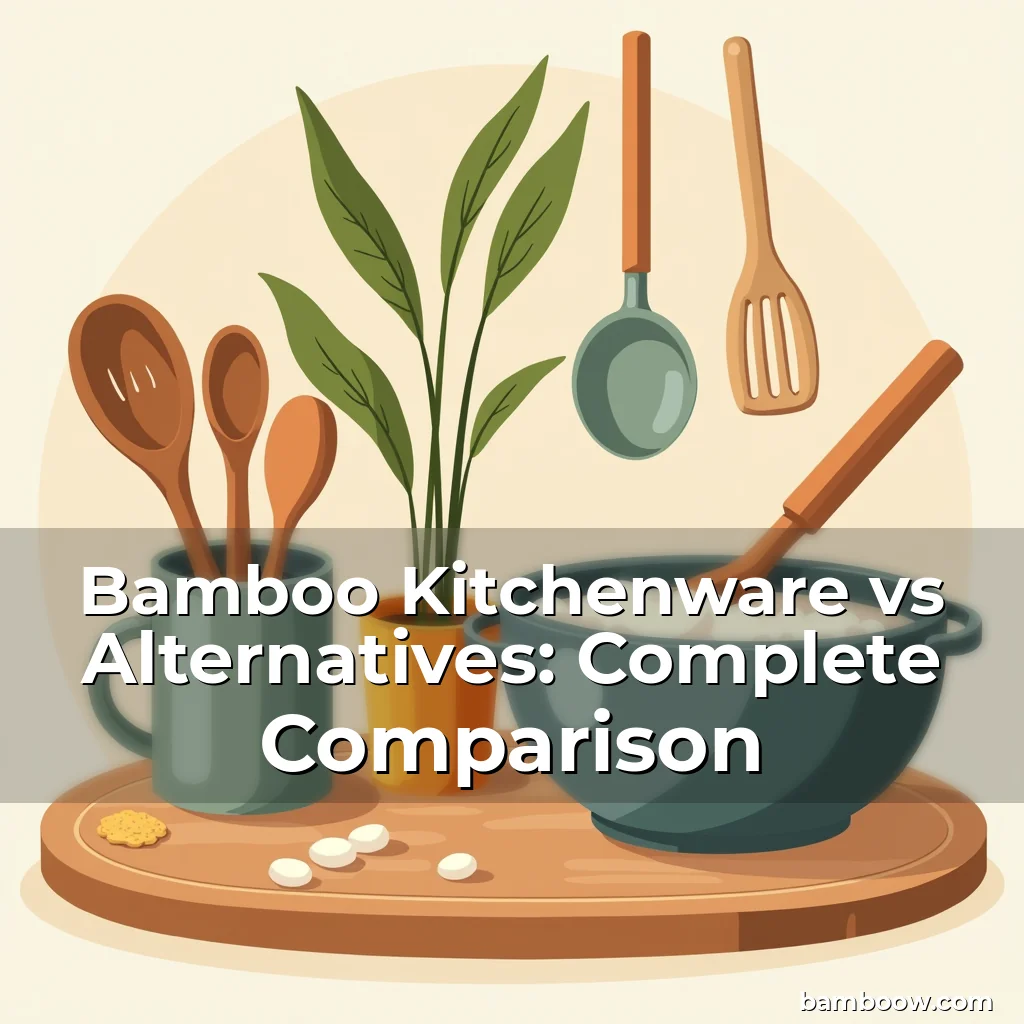
Bamboo Kitchenware vs Alternatives: Complete Comparison
In today’s environmentally conscious world, the choice of kitchen tools extends far beyond functionality—it reflects personal values, sustainability practices, and long-term investment decisions. Among the many options available, bamboo kitchenware stands out as both innovative and practical.
The growing interest in eco-friendly living has elevated bamboo from being merely a decorative material to a staple in modern kitchens worldwide. This shift highlights its versatility and commitment to reducing carbon footprints through renewable resources.
Eco-Friendly Advantages of Bamboo Over Plastic
Bamboo emerges as a superior alternative to plastic due to its rapid growth cycle and minimal environmental footprint during production.
Unlike synthetic plastics derived from fossil fuels, bamboo requires no harmful chemical treatments during cultivation or processing.
- Rapid Regeneration: Mature bamboo plants can regenerate new shoots within months after harvesting, making them a renewable resource unlike finite fossil fuel sources.
- No Toxic Additives: Manufacturers often add BPA and phthalates to traditional plastic cookware; these chemicals leach into food over time, posing health risks.
Furthermore, biodegradable nature allows decomposed bamboo products to return safely to the earth within weeks rather than centuries for petroleum-based plastics.
Many governments now implement policies restricting single-use plastic items, accelerating market demand for natural substitutes like bamboo.
Sustainable Practices Behind Bamboo Production
The lifecycle assessment of bamboo reveals remarkable efficiency across various stages—from forest management techniques to manufacturing processes.
Organic farming methods prevail in responsible bamboo cultivation areas, eliminating pesticides commonly found in industrial agriculture systems.
Local communities benefit economically from cultivating bamboo, creating employment opportunities without exploiting labor practices seen elsewhere in global supply chains.
Environmental Impact Metrics
According to studies conducted by the International Journal of Environmental Research and Public Health, producing one kilogram of bamboo emits approximately 8 kilograms of CO₂ equivalent emissions—far less than cotton (6.7 kg) or polyester (6.9 kg).
Agricultural runoff pollution significantly declines with organic certification programs adopted widely among certified bamboo producers globally.
Durability Compared To Metal Cookware
While metal alloys dominate professional culinary environments, home cooks increasingly favor lightweight yet resilient bamboo utensils for everyday tasks.
Ceramic-coated metal pans typically last around five years before losing non-stick properties; similarly, bamboo cutting boards maintain integrity much longer under regular usage conditions.
- Resistance To Warping: Unlike aluminum or copper counterparts prone to thermal expansion issues causing deformation, solid bamboo maintains dimensional stability regardless of temperature fluctuations.
- Toughness Against Deterioration: When properly maintained through periodic oiling routines, bamboo surfaces resist cracking and splitting better than most hardwood equivalents.
However, prolonged exposure to acidic foods may cause slight discoloration patterns developing naturally along grain lines—a characteristic some consumers interpret as aesthetic enhancement instead of degradation.
Aesthetic Appeal In Contemporary Kitchens
Bamboo introduces warm tones and organic textures absent in minimalist metallic fixtures dominating current design trends.
Manufacturers utilize steam bending technology to shape raw poles into curved handles or hollowed-out bowls retaining structural strength simultaneously achieving elegant forms.
Variations in coloring occur depending upon species harvested—the golden hues prevalent in Phyllostachys edulis contrast sharply against darker shades from Fargesia rufa varieties.
Cost Analysis Between Bamboo And Ceramics
Purchasing decisions frequently hinge upon price comparisons between competing materials available locally or online retailers.
Entry-level sets containing knives, chopping blocks, and serving trays often fall within $50-$150 USD range, comparable to mid-range ceramic dinnerware collections.
- Lifetime Value Proposition: Although initial purchase costs appear similar, replacement frequency differs drastically—one might replace broken ceramic plates multiple times whereas well-maintained bamboo implements endure decades unchanged.
- Maintenance Expenses: Simple maintenance involving occasional rubbing with mineral oil suffices for preserving condition, avoiding costly repair services associated with delicate glazes on fine china dishes.
This financial advantage becomes particularly significant considering average household expenditures devoted towards replenishing damaged tableware annually.
Hygiene Considerations For Different Materials
Allergies or sensitivities necessitate careful selection criteria when choosing dining accessories especially for households containing young children or elderly individuals.
Natural antimicrobial properties inherent in certain bamboo strains reduce bacterial growth rates notably lower than conventional wooden cutlery alternatives.
Proper cleaning protocols include hand-washing procedures exclusively recommended over dishwasher cycles which expose fibers to harsh detergents potentially compromising longevity factors.
Comparative Performance Under Various Cooking Conditions
Each type of kitchen equipment performs uniquely based upon intended application scenarios requiring particular heat resistance levels or moisture absorption capacities.
Bamboo spatulas excel at flipping pancakes or stir-fries without transferring flavors while heat-resistant models withstand oven temperatures exceeding 400°F safely.
Frying pans crafted from layered bamboo composites retain even heating distribution qualities surpassing those observed in cast iron skillets despite lighter weight attributes.
Market Trends Influencing Consumer Preferences
Growing awareness surrounding microplastics contamination in seafood supplies correlates positively with increased adoption rates of bamboo mesh strainers filtering contaminants efficiently.
Younger generations prioritize experiences incorporating elements reflecting social consciousness values such as fair trade certifications applied broadly across product labels nowadays.
Brands specializing in zero-waste lifestyles showcase entire kitchen setups featuring exclusively plant-based components reinforcing brand loyalty through shared ethical standards.
Conclusion
Bamboo kitchenware offers compelling benefits spanning ecological responsibility, functional reliability, visual appeal, economic prudence, hygienic safety, and adaptability across diverse culinary applications.
Investing wisely in high-quality handmade pieces ensures enduring satisfaction aligned perfectly with evolving expectations toward mindful consumption behaviors shaping future generations’ relationships with everyday objects.

news is a contributor at BamBoow. We are committed to providing well-researched, accurate, and valuable content to our readers.
You May Also Like


About news
Passionate about sustainable living and bamboo cultivation. Sharing insights on eco-friendly practices and green technology.